Provide Sustainable Electric Bikes For Everyone
Malesuada fames ac turpis egestas. Interdum velit laoreet id donec. Eu tincidunt tortor aliquam nulla facilisi cras.


There’s this moment—you know the one—when you’re grinding up a familiar climb and someone on what looks like a slightly nicer bike just glides past you like you’re standing still. It stings a little. Your legs are burning, your lungs are screaming, and there they go, disappearing around the bend. Later, you tell yourself it was probably just a stronger rider. And maybe it was. But there’s also a decent chance they were riding a machine that was simply more efficient than yours, and that’s a gap you can actually close.
Here’s the thing: speed isn’t just about what you bring to the bike—it’s about what the bike brings to you. This isn’t some mystical, gear-dependent philosophy. It’s physics, and physics is beautifully democratic. The same aerodynamic principles that make a professional cyclist faster apply to you, whether you’re racing or just trying to keep up with your friends on a Saturday morning ride. The difference is that pros have already optimized nearly everything. You probably haven’t. And that’s where the opportunity lives.
The prevailing myth is that upgrades are either trivial or prohibitively expensive. Either your bike is “good enough” and tinkering with it is a waste of money, or you need to drop five figures on a new frame to see any real gains. Neither is true. There’s a sweet spot—a collection of upgrades that deliver measurable improvements without requiring you to take out a second mortgage. Some of these improvements are immediate, almost shocking in their impact. Others are subtle, the kind of thing you notice after a few weeks of riding and suddenly realize you’re not as tired at the end of a long ride.
Let me walk you through the upgrades that actually matter, the ones that sit at the intersection of impact, accessibility, and value. But first, we need to understand why these upgrades work.
Before we dive into specific components, let’s talk about what actually makes a bike faster. This isn’t about marketing speak or the allure of shiny new parts. It’s about the fundamental forces working against you every time you pedal.
When you’re riding a road bike, you’re fighting three main enemies: aerodynamic drag, rolling resistance, and mechanical friction. Aerodynamic drag is the big one—it increases exponentially with speed, meaning that at higher velocities, you’re spending most of your energy just pushing air out of the way. Rolling resistance is the friction between your tires and the road surface. Mechanical friction lives in your drivetrain, your bearings, and anywhere two metal parts meet and move against each other.
Here’s where it gets interesting: you can’t eliminate any of these forces, but you can dramatically reduce them. And the reduction compounds. A 2% improvement in aerodynamics, a 3% improvement in rolling resistance, and a 1% improvement in drivetrain efficiency might not sound like much in isolation. But together, they can translate to 5-8% more speed at the same power output. For a recreational cyclist, that might mean the difference between a 19 mph average and a 20.5 mph average on a long ride. For a competitive cyclist, it could be the difference between finishing in the top five and finishing in the top ten.
Now, here’s the counter-argument you might be thinking: “Does this really matter if I’m not racing?” It’s a fair question. And the honest answer is: it depends on what matters to you. If you ride purely for fitness and don’t care about pace, then no, these upgrades might not move the needle for you. But if you enjoy the sensation of speed, if you like riding with faster friends without feeling like you’re constantly on the edge of your limit, if you want to cover more distance in the same amount of time—then yes, these upgrades absolutely matter.
The beauty of incremental improvement is that it’s accessible to everyone. You don’t need to be an elite athlete to benefit from a better wheel or a properly tuned drivetrain. You just need to understand which upgrades deliver the best return on investment.
Let’s start with the most obvious place: your wheels. And I’m not just saying this because they’re the most visible component on your bike. Wheels are genuinely where you get the biggest bang for your buck when it comes to speed improvements.
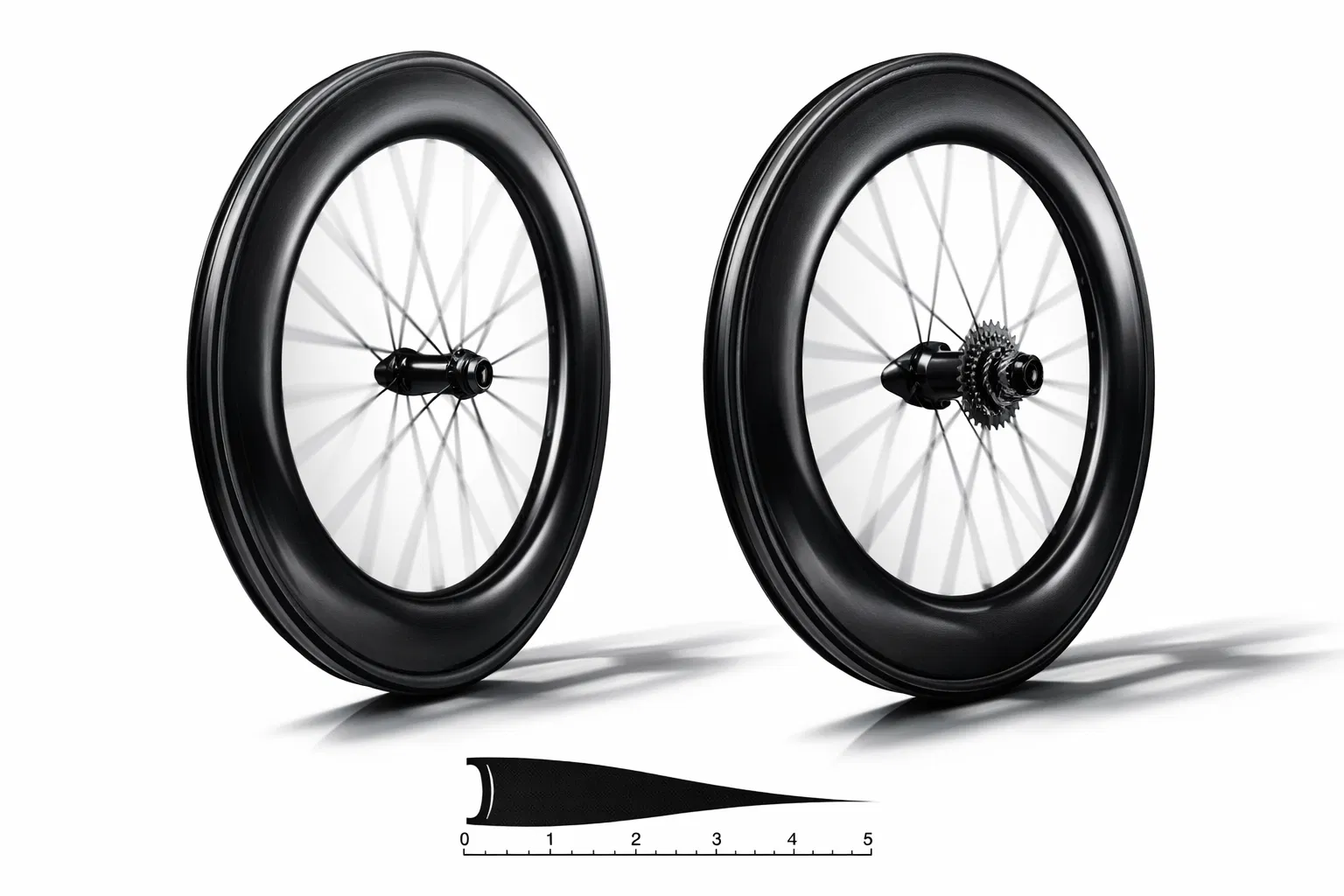
Think about it logically: your wheels are constantly moving through the air. They’re not just carrying your weight; they’re displacing air with every rotation. A wheel with a traditional shallow rim profile has a blunt edge that creates turbulence. A wheel with a deeper, more aerodynamic profile cuts through the air more smoothly, like a knife instead of a club.
The aerodynamic benefit of deeper rims is real and measurable. Research from cycling aerodynamics labs suggests that upgrading from a standard 25mm rim depth to a 50mm rim depth could save roughly 10-15 watts of power at 25 mph. That’s not trivial. That’s the difference between cruising comfortably and working hard. At a moderate pace, that translates to roughly 1-2 mph of additional speed at the same effort level.
But here’s where it gets nuanced: deeper rims aren’t universally better. They’re heavier, which means they take more energy to accelerate. On steep climbs, that extra weight becomes a liability. They’re also more susceptible to crosswinds—an 80mm rear rim in a strong side wind can feel like you’re wrestling a shopping cart. So the ideal wheel setup depends on the terrain you ride most often.
For rolling terrain and flat roads, a 50-60mm front wheel and a 70-80mm rear wheel is a sweet spot. You get meaningful aerodynamic benefits without the weight penalty becoming a problem, and the handling remains predictable in most wind conditions. For mountainous terrain, you might opt for something shallower, like 35-45mm, accepting a bit of aerodynamic penalty in exchange for better acceleration and climbing performance.
The other critical factor is rolling resistance. This is where tire technology comes into play, but it also depends on the wheel’s construction. A wheel with a stiff rim and high-quality bearings will roll more freely than a wheel with flex and friction in the hub. When you’re comparing wheels, look for mentions of bearing quality and rim stiffness. A well-built wheel will feel noticeably smoother and faster than a poorly constructed one, even if the aerodynamic profile is similar.
There’s also the matter of weight. While aerodynamics dominate at higher speeds, weight becomes more important on climbs and during acceleration. A lighter wheel accelerates faster and climbs easier. The sweet spot for most road bikes is somewhere between 1,400 and 1,600 grams per wheelset. Below that, you’re usually paying exponentially more for marginal gains. Above that, you’re carrying unnecessary weight.
Your drivetrain is where your power gets translated into forward motion. It’s also where a surprising amount of energy gets lost to friction. A clean, well-maintained, properly tuned drivetrain can be 2-3% more efficient than a neglected one. That might not sound like much, but over the course of a long ride, it adds up.
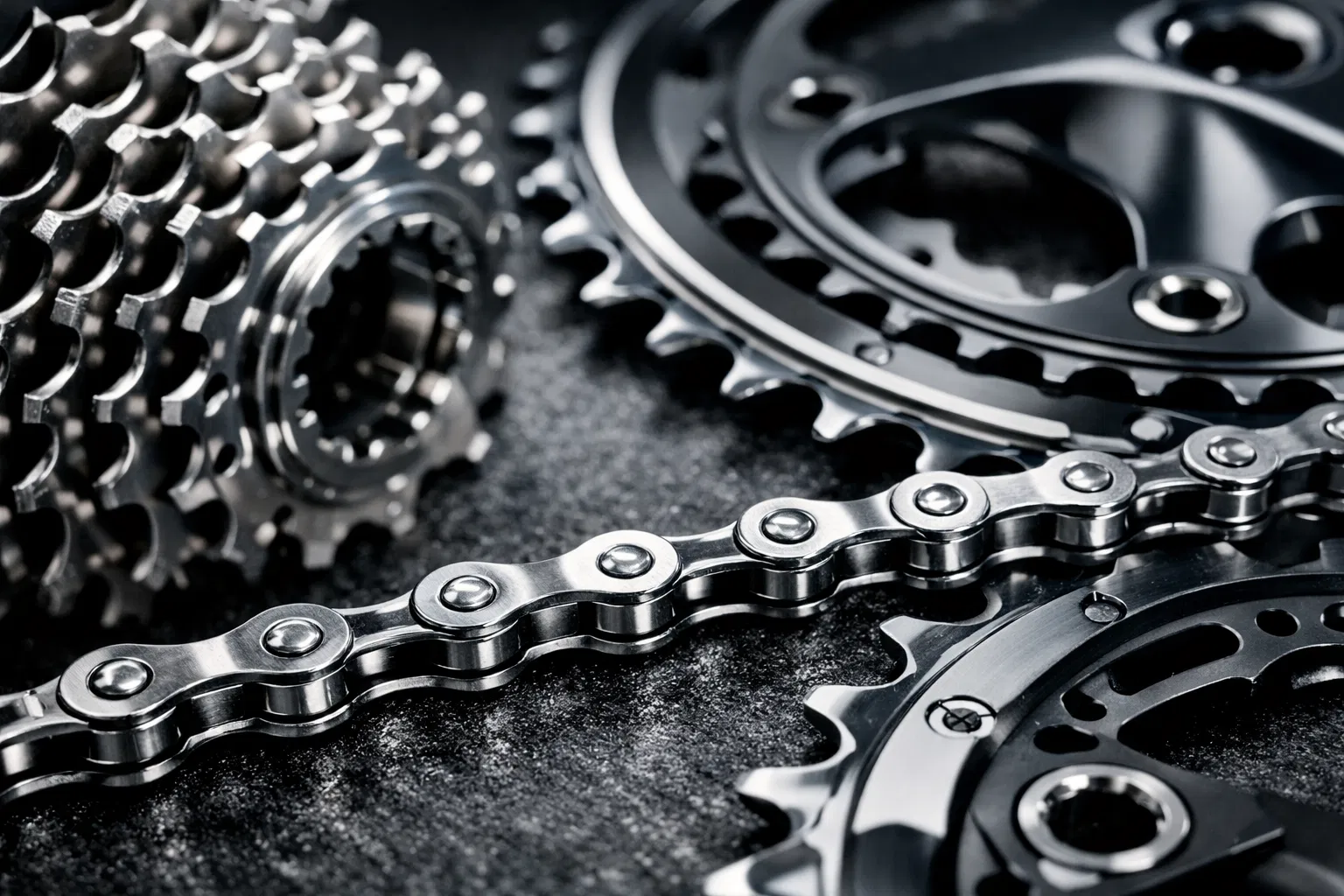
Let’s start with the chain. A worn chain is like a rusty gate—it’s going to resist movement. The thing about chains is that they wear gradually, and you probably won’t notice it happening. But your legs will. A chain that’s been ridden for 2,000 miles will have more friction than a new chain, and the difference is measurable. The solution is simple: replace your chain regularly. Most chains last between 1,500 and 3,000 miles depending on conditions and maintenance. If you ride in wet conditions frequently, replace it more often.
When you do replace your chain, consider upgrading to a higher-quality option. Premium chains have tighter tolerances and better surface treatments that reduce friction. The difference in speed between a budget chain and a premium chain is probably 1-2 watts at moderate speeds, which doesn’t sound like much until you realize that’s roughly 0.3-0.5 mph of additional speed at a constant effort level.
The cassette (the cluster of sprockets on your rear wheel) is another area where quality matters. A worn cassette will shift poorly and create more friction. But beyond that, the design of the cassette affects how efficiently power is transferred. Modern cassettes with optimized tooth profiles shift more smoothly and reduce power loss during transitions between gears. If your cassette is more than a few years old, upgrading to a newer design can feel noticeably smoother and faster.
Here’s something most people don’t think about: gear selection. The gears you choose to ride in matter more than you might think. If you’re constantly cross-chaining (riding in a large chainring with a large cog, or a small chainring with a small cog), you’re creating extra friction and wear. The chain has to bend at a sharper angle, and power transfer becomes less efficient. Ideally, you want to stay in the middle of your cassette most of the time, using your front derailleur to make large adjustments and your rear derailleur for fine-tuning.
For most riders, upgrading to a wider-range cassette (like an 11-32 instead of an 11-28) can actually improve efficiency on rolling terrain. Why? Because you can stay in a more efficient gear range more of the time. You’re not constantly grinding in too high a gear or spinning in too low a gear. You’re in the sweet spot where your cadence is around 90-95 RPM, which is where most cyclists are most efficient.
Here’s where things get interesting, because this is where you can make dramatic improvements without spending a fortune. Aerodynamics isn’t just about your wheels and frame shape. It’s about you. Your body is, frankly, a pretty inefficient shape from an aerodynamic perspective. You’re basically a parachute with legs. But you can make yourself a much more efficient parachute.
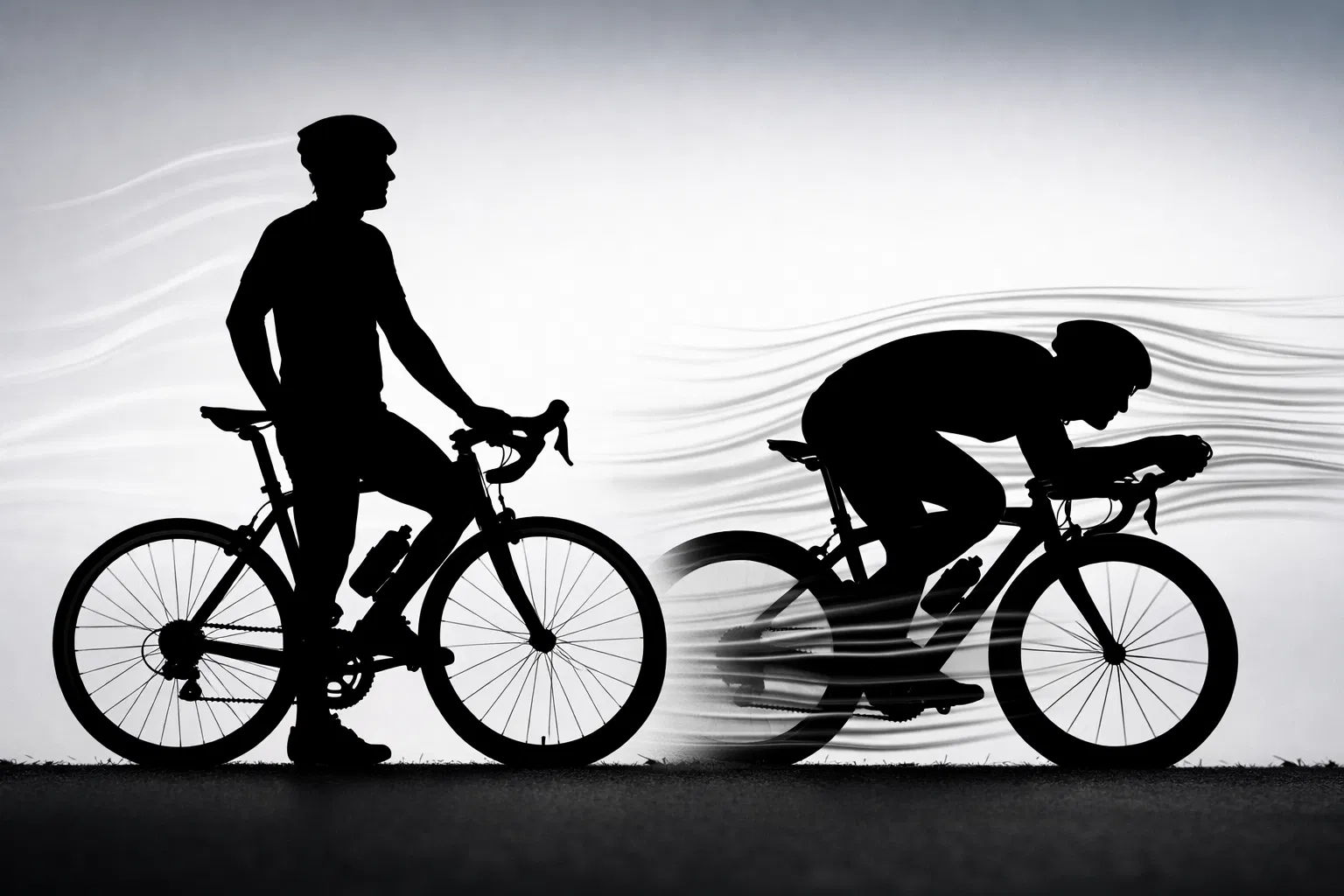
The most obvious aerodynamic adjustment is your riding position. When you’re sitting upright with your hands on the brake hoods, you’re presenting a large frontal area to the wind. When you drop into the drops, you reduce your frontal area by roughly 20-25%. At 20 mph, that translates to roughly 15-20 watts of power savings. That’s huge. That’s the difference between feeling strong and feeling tired.
But here’s the thing: you can’t just drop into the drops and hold it for hours. Your back and shoulders will get fatigued. Your hands and arms will go numb. So the real upgrade here isn’t just about position—it’s about having the flexibility to move between positions throughout your ride. This is where handlebar choice becomes important.
If your current bike has drop bars that are too narrow or positioned too far forward, upgrading to bars with a more comfortable reach and a wider drop section can make a huge difference in how long you can comfortably hold an aggressive position. Some modern drop bars have a shallower drop (the vertical distance from the hoods to the drops), which makes them more accessible for riders who don’t have elite flexibility. Others have a wider flare, which gives you more hand positions and makes climbing easier.
The seat tube angle of your frame also affects aerodynamics. A steeper seat tube angle (around 74-76 degrees) allows you to get lower and more aggressive without sacrificing comfort. A slacker angle (72-73 degrees) is more comfortable for longer rides but makes it harder to get into a truly aero position. If you’re thinking about upgrading your frame, this is worth considering.
Here’s something most people overlook: your helmet. A poorly designed helmet creates a wake of turbulent air behind your head. A well-designed helmet with a pointed tail reduces that wake. The difference between a good aero helmet and a standard helmet is roughly 5-10 watts at 25 mph. That’s 0.3-0.6 mph of free speed. It’s not nothing.
If wheels are the most impactful upgrade, tires are the most overlooked. Most people think of tires as a commodity—they all look the same, so they must perform the same. This is wildly incorrect.
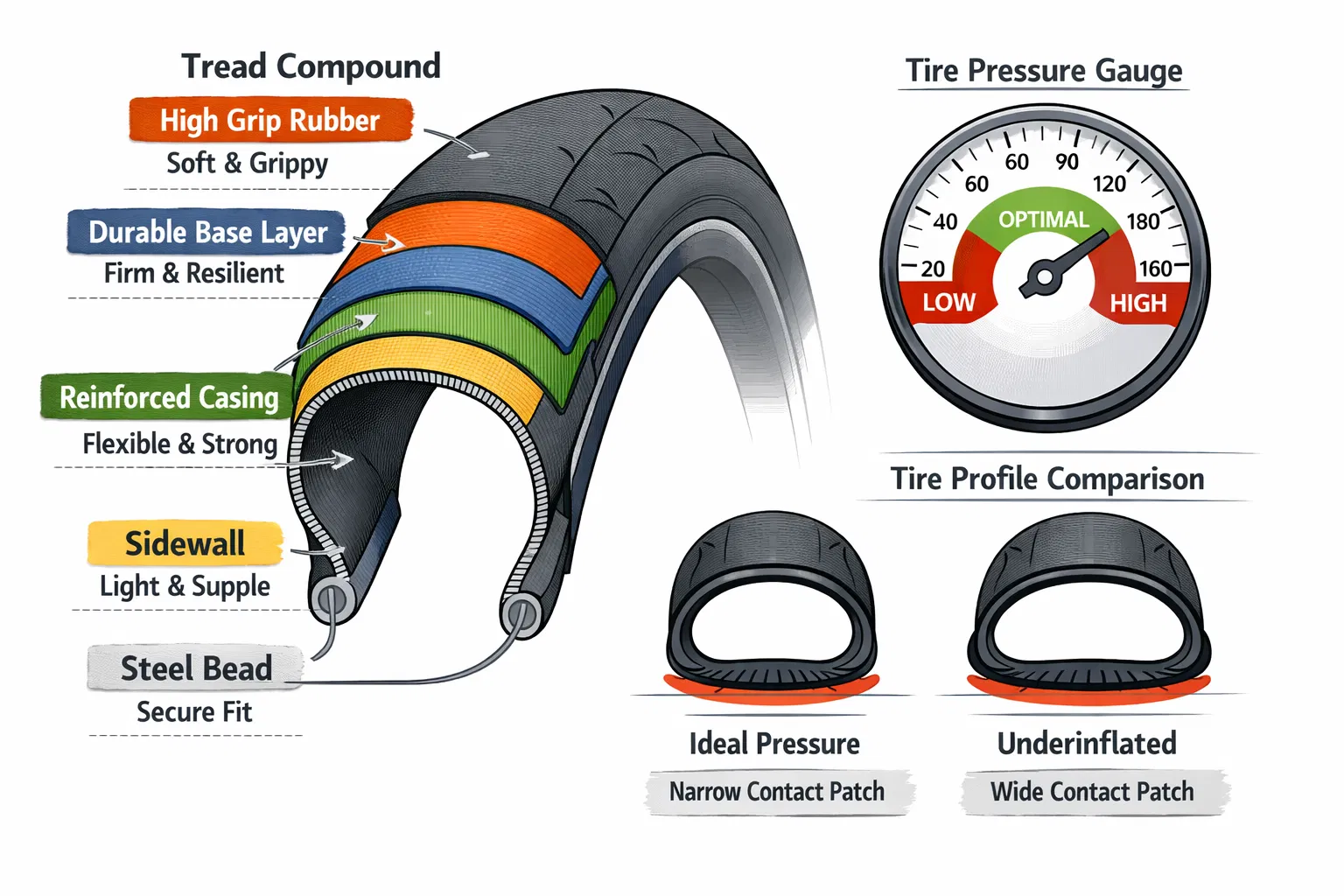
Rolling resistance is the enemy of speed, and tire selection is the primary driver of rolling resistance. A premium tire with a high-quality rubber compound and a well-optimized tread pattern can have 20-30% lower rolling resistance than a budget tire. That’s not 20-30% lower at a specific speed—that’s 20-30% lower across the board. At 20 mph, that could mean 10-15 watts of power savings. That’s real.
The tire compound is where most of the magic happens. A softer compound grips better and rolls faster but wears quicker. A harder compound lasts longer but rolls slower. Premium tire manufacturers have figured out how to get close to the best of both worlds through careful material science and manufacturing processes. They use specialized rubber blends that are optimized for low rolling resistance without sacrificing grip.
Tire pressure is another critical factor that most riders get wrong. The conventional wisdom is to run your tires as hard as possible to minimize rolling resistance. This is partially true, but it’s more nuanced than that. Yes, lower pressure increases rolling resistance. But it also increases the contact patch, which improves grip and comfort. There’s a sweet spot—usually somewhere between 90-110 PSI for a 25mm tire, depending on your weight and riding conditions.
Here’s the thing: if you run your tires too hard, you’ll actually be slower on rough pavement because you’re bouncing around and losing traction. If you run them too soft, you’ll have higher rolling resistance and risk pinch flats. The ideal pressure is the highest pressure you can run while still maintaining good grip and comfort. For most riders on smooth pavement, that’s around 100-105 PSI for a 25mm tire.
Tire width is another consideration. Wider tires (28mm instead of 23mm) have lower rolling resistance on rough pavement because they don’t deform as much when they hit imperfections. On perfectly smooth pavement, a narrower tire is slightly faster. But in the real world, where roads are rarely perfectly smooth, a 25mm or 28mm tire is usually faster than a 23mm tire at the same pressure.
Here’s something that separates fast riders from slow riders, and it has nothing to do with spending money: maintenance. A well-maintained bike is dramatically faster than a neglected one. I’m not exaggerating. A dirty chain with gunk built up on it can cost you 5-10 watts of power. A derailleur that’s slightly out of adjustment might cause you to drop a chain at a critical moment. Brake pads that are worn can create drag even when you’re not braking.

Let’s talk about chain maintenance. A clean chain is a fast chain. When you ride in wet conditions or dusty conditions, gunk accumulates on your chain. This gunk acts like a grinding paste, accelerating wear and increasing friction. The solution is simple: clean your chain regularly. If you ride in dry conditions, clean it every 300-500 miles. If you ride in wet conditions, clean it every 150-200 miles.
The process is straightforward. Use a chain cleaning tool (they’re cheap, like $15-20) with a degreaser. Run the chain through the tool for a few minutes, then rinse it with water and dry it thoroughly. Then apply a fresh coat of chain lube. The type of lube matters—use a lube designed for your conditions. Wet lube for wet conditions, dry lube for dry conditions. Wet lube is stickier and lasts longer in wet weather but attracts more dirt. Dry lube is cleaner but needs more frequent application.
Beyond the chain, pay attention to your bearings. Your wheel hubs, bottom bracket, and headset all have bearings that can accumulate dirt and lose their smoothness over time. If your bike feels sluggish or your wheels don’t spin as freely as they used to, it might be time to have your bearings serviced. This isn’t something you need to do frequently—maybe once a year if you ride a lot—but it makes a noticeable difference.
Cable tension is another often-overlooked factor. If your derailleur cables are too loose, your shifting will be sluggish and imprecise. If they’re too tight, your derailleur might not return to the small ring properly. Proper cable tension ensures crisp, fast shifting, which means you spend less time between gears and more time in the optimal gear for your current speed.
Brake alignment is worth checking too. If your brake pads are rubbing on the rim even slightly, you’re creating drag. This is especially noticeable on long descents, where brake drag can slow you down noticeably. A quick adjustment of your brake calipers can eliminate this drag and make your bike feel noticeably faster.
At this point, you might be thinking: “Okay, so I need new wheels, a new chain, a new cassette, new tires, new bars, and a new helmet. That’s going to cost me thousands of dollars.” And you’re right—if you do all of that at once, it will be expensive. But here’s the thing: you don’t need to do it all at once.
The philosophy of marginal gains—making small, incremental improvements that compound over time—is how you build a faster bike without breaking the bank. Start with the upgrade that will have the biggest impact relative to its cost. For most riders, that’s new tires. A set of premium tires costs $100-150 and can save you 10-15 watts of power. That’s an incredible return on investment.
Next, consider your wheels. If your current wheels are old or heavy, upgrading to a modern, aerodynamic wheelset can be transformative. Yes, it’s expensive—a quality wheelset can cost $800-1500—but the performance gains are substantial. If you can’t justify that expense, consider upgrading just your rear wheel first. The rear wheel is more important aerodynamically than the front wheel, and upgrading just the rear will still give you meaningful improvements.
After wheels and tires, focus on drivetrain maintenance and optimization. Replace your chain, consider upgrading your cassette if it’s old, and make sure your shifting is dialed in. This is relatively inexpensive but has a real impact on how your bike feels and performs.
Then, if you have the budget, consider position-related upgrades: new handlebars, a new stem, or a new saddle. These upgrades are often overlooked, but they can have a dramatic impact on comfort and aerodynamics. A more comfortable position means you can ride longer and harder without fatigue. A more aerodynamic position means you’re faster at the same effort level.
Finally, consider a new helmet if yours is old. A modern aero helmet is a relatively inexpensive way to gain a bit of free speed.
The beauty of this approach is that you’re constantly improving your bike without any single upgrade breaking the bank. And each upgrade makes the next upgrade more effective. Better wheels make your improved drivetrain more noticeable. Better tires make your improved wheels even more effective. It’s a virtuous cycle.
Here’s where I need to be honest with you: at some point, the improvements become marginal. You can’t keep upgrading forever and expect to keep seeing proportional gains. There’s a concept in engineering called diminishing returns, and it applies to bike upgrades.
Going from a 23mm tire to a 25mm tire might save you 5 watts. Going from a 25mm tire to a 28mm tire might save you 2 more watts. Going from a 28mm tire to a 30mm tire might save you 1 more watt. The gains get smaller as you optimize further.
Similarly, upgrading from an old, heavy wheelset to a modern, aerodynamic wheelset might save you 20 watts. Upgrading from that modern wheelset to an even more optimized wheelset might save you 5 more watts. The law of diminishing returns is relentless.
This is actually good news for you, because it means that the biggest improvements come from the most accessible upgrades. You don’t need to spend $5,000 to get 80% of the way to a truly optimized bike. You can get there with $1,500-2,000 in thoughtful upgrades.
Here’s something that doesn’t show up in watt measurements or speed calculations: how a faster bike makes you feel. When you’re riding a bike that’s dialed in—with good wheels, good tires, a clean drivetrain, and a position that works for your body—it feels different. It feels alive. You feel faster, even if the speedometer says you’re going the same speed as before.
This matters more than you might think. When your bike feels fast, you ride with more confidence. You’re more willing to push hard on climbs. You’re more comfortable in a group ride. You’re more likely to go out for a ride on a day when you might otherwise stay home. And all of that translates to more enjoyment and better fitness.
There’s also the matter of efficiency. A faster bike means you can cover the same distance in less time, or cover more distance in the same time. If you have limited time to ride—and most of us do—a faster bike means you can get more out of your rides. You can explore further, climb more, or simply enjoy the sensation of speed.
Speed on a road bike isn’t a mystery. It’s not something that only elite athletes can achieve. It’s the result of thoughtful choices about components, maintenance, and position. Some of these choices are expensive. Some are cheap. Some require no money at all, just attention and care.
The upgrades I’ve outlined in this article—better wheels, a well-maintained drivetrain, optimized tires, a more aerodynamic position, and consistent maintenance—can collectively make your bike 5-10% faster at the same effort level. That might not sound like much, but it’s the difference between a 19 mph average and a 20.5 mph average. It’s the difference between struggling to keep up with faster friends and riding comfortably with them. It’s the difference between a bike that feels sluggish and a bike that feels alive.
Start somewhere. Pick one upgrade that fits your budget and your priorities. Ride with it for a few weeks. Feel the difference. Then pick the next one. Before long, you’ll have a bike that’s not just faster, but faster in a way that you can feel every time you ride it. And that’s worth something.