Provide Sustainable Electric Bikes For Everyone
Malesuada fames ac turpis egestas. Interdum velit laoreet id donec. Eu tincidunt tortor aliquam nulla facilisi cras.


Look, I remember my first road bike. It was a hand-me-down, a sturdy aluminum beast painted a rather fetching shade of metallic blue. It wasn’t light, it wasn’t particularly aerodynamic, but it was mine. And for years, it carried me through countless miles, up endless climbs, and down exhilarating descents. It was a reliable hammer, a steadfast companion that taught me the joy of two wheels. Fast forward a decade or two, and the cycling landscape has, shall we say, evolved. Now, walk into any bike shop, or scroll through any online forum, and you’re immediately confronted with the great material debate: Carbon Road Bikes versus their aluminum brethren. It’s a conversation that often feels less like a technical discussion and more like a philosophical treatise, steeped in dogma and personal preference. But here’s the thing: beneath the fervent opinions and glossy marketing, there are tangible differences that genuinely impact your ride, your wallet, and your overall cycling experience.
This isn’t just about picking a material; it’s about understanding what you want from your cycling journey. Are you chasing KOMs and podium finishes, where every gram and watt saved is a victory? Or are you a weekend warrior, a commuter, a gravel-curious adventurer who values robustness and a bit of extra cash in your pocket for post-ride coffee? The choice between an Aluminum road bike and a carbon one isn’t a simple right or wrong; it’s a nuanced decision, a delicate balance of priorities. And frankly, the lines are blurrier than ever before. Gone are the days when aluminum was synonymous with harshness and carbon with fragility. Modern manufacturing has pushed both materials to their limits, creating bikes that defy easy categorization. So, let’s cut through the noise, shall we? Let’s explore the heart of the matter, not with the staticky hum of old, biased arguments, but with a fresh perspective, as if we’re dissecting a particularly intriguing piece of tech over a pint.
Before we dive into the nitty-gritty of ride feel and performance, it’s crucial to understand the fundamental differences in what these materials are and how they’re made. It’s like understanding the ingredients before you bake a cake; you can’t truly appreciate the final product without knowing what went into it.
Aluminum, specifically aluminum alloys (most commonly 6061 or 7005), has been the backbone of the cycling industry for decades. It’s abundant, relatively inexpensive, and easy to work with. Historically, aluminum frames were characterized by their stiff, sometimes unforgiving ride quality, often attributed to the need for larger diameter tubes to achieve sufficient strength and stiffness. The crisp, metallic scent of a freshly welded aluminum frame is something many of us can recall from our early days in bike shops.
But modern aluminum is a different beast. Advances in manufacturing techniques, particularly hydroforming, have revolutionized what’s possible. Hydroforming involves forcing fluid at high pressure into aluminum tubes, allowing manufacturers to create complex, variable-thickness shapes. This means they can strategically add material where stiffness is needed (like the bottom bracket for power transfer) and remove it where compliance is desired (like the seatstays for comfort). The result? An aluminum frame that’s lighter, stronger, and significantly more comfortable than its predecessors. Welds, once a tell-tale sign of an aluminum frame, are now often smoothed and polished, giving a seamless, almost carbon-like aesthetic. It’s a testament to engineering ingenuity, squeezing every last drop of performance out of a familiar material.
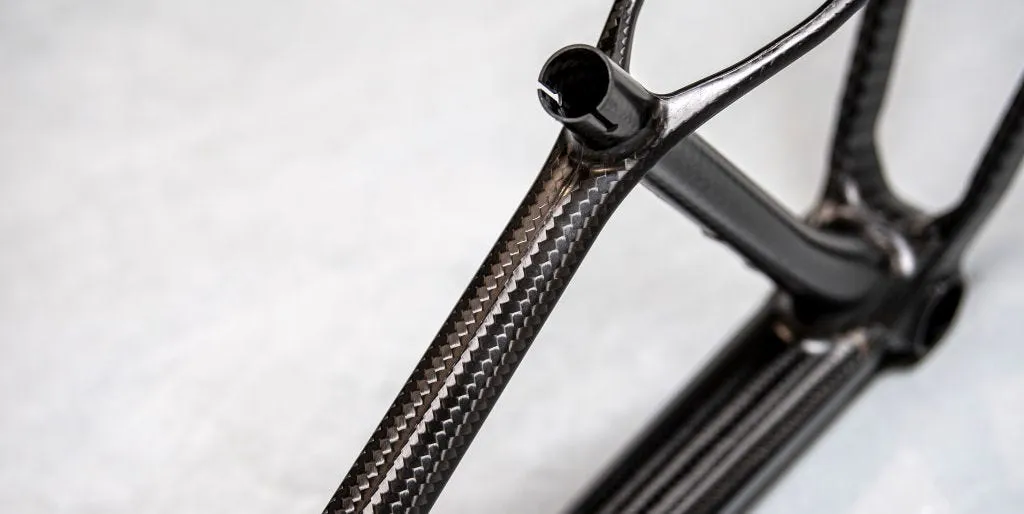
Now, let’s talk about Carbon Road Bikes. Carbon fiber isn’t a single material; it’s a composite. Think of it as a fabric woven from incredibly thin strands of carbon, held together by a resin matrix. The magic of carbon lies in its anisotropy – its strength and stiffness can be precisely controlled depending on the orientation of the fibers. This allows engineers to literally tune the ride quality of a frame, making it incredibly stiff in certain directions (for pedaling efficiency) and compliant in others (for absorbing road vibrations). It’s a precision instrument, meticulously crafted to perform a specific symphony of speed and comfort.
The manufacturing process for carbon frames is far more labor-intensive and complex than for aluminum. Sheets of carbon fiber, often pre-impregnated with resin (pre-preg), are cut into precise patterns and then carefully laid up by hand into molds. This layering process, known as layup, is where the frame’s characteristics are truly defined. The mold is then heated and pressurized, curing the resin and forming the final, monolithic structure. This intricate process is why carbon frames tend to be significantly more expensive. But the payoff? A frame that can be incredibly light, exceptionally stiff, and remarkably comfortable, all at once. It’s a material that allows for unprecedented freedom in design, leading to the sleek, aerodynamic shapes that dominate the professional peloton today.
Carbon fiber frame
When you first start looking at bikes, the numbers jump out at you. Weight, primarily. Everyone wants a lighter bike, right? It’s almost a primal urge, this desire to shed grams. But the truth, as always, is a bit more complicated than a simple number on a scale. And then there’s stiffness – that elusive quality that promises efficient power transfer but can sometimes translate to a bone-jarring ride. Let’s unpack these, shall we?
Historically, Carbon Road Bikes have held the undisputed crown in the weight department. The ability to manipulate carbon fiber’s properties means engineers can create frames that are incredibly light without sacrificing strength. A top-tier carbon frame can easily dip below the 800-gram mark, sometimes even lower. This translates to a bike that feels nimble on climbs, accelerates with a snappy eagerness, and generally feels more responsive to rider input. It’s the difference between lifting a feather and, well, a slightly heavier feather. For the serious racer or the weight-weenie enthusiast, this is often the primary draw.
However, modern Aluminum road bike frames have closed the gap considerably. With advanced alloys and hydroforming, some high-end aluminum frames can be surprisingly light, often hovering around the 1100-1300 gram range. While still heavier than their carbon counterparts, the difference is often less significant than the weight of the rider, their water bottles, or even a particularly hearty breakfast. And here’s a little secret: the overall weight of the bike is a sum of its parts. A carbon frame paired with heavy wheels and components might end up weighing more than a well-spec’d aluminum frame with lighter wheels. So, while frame weight is important, it’s not the only variable in the equation. It’s like judging a book by its cover; you need to look at the whole package.
Stiffness is a double-edged sword in cycling. On one hand, a stiff frame means that more of your pedaling power is translated directly into forward motion, rather than being lost to frame flex. This is particularly noticeable during sprints or hard climbing efforts. Carbon Road Bikes excel here because, as mentioned, the carbon layup can be optimized for stiffness in specific areas, like the bottom bracket and head tube, where power transfer and steering precision are paramount. It’s like having a direct line from your legs to the road, with no static on the connection.
Aluminum road bike frames, by their nature, are also quite stiff. To achieve the necessary strength and rigidity, aluminum tubes are often made with larger diameters and thicker walls than carbon. This can result in a very direct, almost raw, feel. For some riders, this is a positive – a feeling of immediate response and connection to the road. For others, especially on longer rides or rougher pavement, this can translate to a harsher ride, where every pebble and crack in the road is faithfully transmitted to your hands and posterior. It’s the difference between a finely tuned suspension and a rigid go-kart. Modern aluminum frames, however, use techniques like thinner seatstays and strategically shaped tubes to introduce a degree of compliance, attempting to mitigate this inherent harshness. They’re getting better, no doubt, but it’s a constant battle against the material’s fundamental properties.
This is where the debate gets truly interesting, and often, most subjective. “Ride quality” is that intangible feeling, the sum of how a bike responds to the road, absorbs vibrations, and generally makes you feel after hours in the saddle. It’s the difference between a pleasant hum and a jarring rattle.
Carbon Road Bikes are often lauded for their superior ride quality, primarily due to carbon fiber’s inherent vibration-damping properties. The material itself can absorb high-frequency road buzz, leading to a smoother, more comfortable ride. This isn’t to say carbon bikes are universally plush; a stiff race-oriented carbon frame can still be quite firm. But generally, the ability to engineer compliance into the frame means that carbon bikes can offer a remarkable balance of stiffness for power transfer and comfort for long days. It’s like the frame is whispering sweet nothings to the road, rather than shouting at it. This comfort can translate to less fatigue on epic rides, allowing you to go further and faster.
Aluminum road bike frames, as hinted earlier, traditionally have a reputation for being less comfortable. The direct transfer of road vibrations can be fatiguing. However, this isn’t a universal truth. A well-designed aluminum frame, especially when paired with carbon components (like a carbon fork and seatpost), can offer a surprisingly smooth ride. Tire choice also plays a massive role here; wider tires run at lower pressures can dramatically improve comfort on any frame material. So, while carbon generally has an advantage in engineered compliance, a good aluminum bike isn’t necessarily a torture rack. It’s more about the overall package and how the manufacturer has balanced the material’s characteristics.
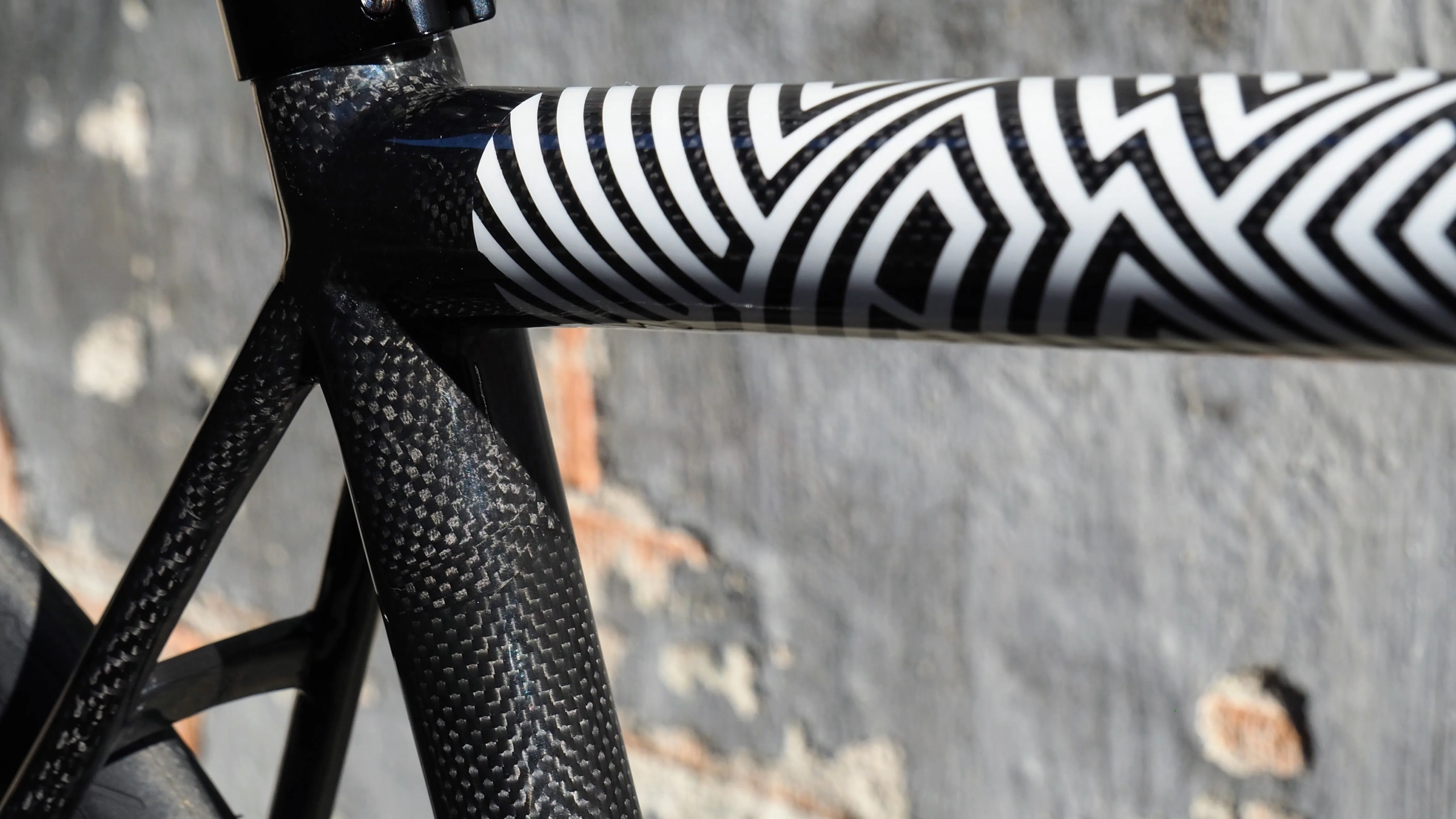
Cyclist riding carbon road bike on mountain road
Beyond the immediate sensations of a ride, there’s the long game to consider. How will your bike hold up to the inevitable bumps, scrapes, and occasional tumbles? What happens when something goes wrong? And, perhaps most importantly for many of us, what’s the damage to the bank account? These are the pragmatic questions that often get overshadowed by the allure of speed and lightness, but they’re crucial for making an informed decision.
This is an area where popular perception often clashes with reality. Many riders, myself included at one point, harbor a lingering fear that Carbon Road Bikes are inherently fragile. The image of a carbon frame shattering from a minor impact, like a dropped wine glass, is a persistent one. And while it’s true that carbon fiber can suffer catastrophic failure from a sharp, localized impact (say, a direct hit from a car bumper or a particularly nasty rock strike), it’s also incredibly resilient to fatigue. I remember reading a study, perhaps from a materials science lab at a European university, that suggested carbon fiber actually has a much longer fatigue life than aluminum. It doesn’t suffer from the same work-hardening and eventual cracking that can plague aluminum over many years of stress cycles. So, for the stresses of normal riding, carbon is remarkably durable.
However, the nature of carbon damage is different. A crack in carbon fiber often requires specialized repair, which can be costly, though many reputable carbon repair shops can restore a damaged frame to near-original strength. The key is that carbon damage isn’t always immediately obvious; a seemingly minor ding could compromise the structural integrity. This is where a keen eye and a bit of caution come into play. It’s not fragile, but it demands a different kind of respect.
Aluminum road bike frames, on the other hand, tend to be more forgiving of minor impacts. A dent in an aluminum tube might look ugly, but it often doesn’t compromise the frame’s safety as severely as a crack in carbon. Aluminum is also generally easier and cheaper to repair, though significant damage often means replacing the frame entirely. The trade-off, as mentioned, is aluminum’s finite fatigue life. Over many years and countless flex cycles, aluminum can develop microscopic cracks that eventually propagate, leading to failure. This isn’t to say your aluminum frame will suddenly disintegrate, but it’s a factor to consider for a bike you plan to keep for a decade or more. It’s the difference between a material that wears out predictably and one that can fail unexpectedly from a specific trauma.
When it comes to fixing things, aluminum often wins on accessibility. Many minor repairs on an Aluminum road bike can be tackled by a competent home mechanic with standard tools. Replacing a bent derailleur hanger, for instance, is usually a straightforward bolt-on affair. Even frame repairs, if minor, can sometimes be handled by a skilled welder, though this is less common for bike frames due to the specialized alloys and heat treatment involved.
Carbon Road Bikes are a different kettle of fish. While routine maintenance (like replacing components) is the same, any damage to the carbon structure itself typically requires a specialist. The process involves grinding away the damaged layers, laying up new carbon patches, and then curing them. It’s an art form, really, and not something you’d want to attempt in your garage with a tube of epoxy. This means that while carbon frames are repairable, the cost and expertise required are significantly higher. It’s a consideration for those who prefer to be self-sufficient with their bike maintenance or who live far from specialized repair shops.
Let’s not beat around the bush: price is often the deciding factor for many riders. And here, the distinction is usually quite clear. Aluminum road bike frames are almost universally more affordable than their carbon counterparts. The raw materials are cheaper, and the manufacturing process, while sophisticated, is less labor-intensive and requires less specialized equipment than carbon layup. This means you can get a very well-equipped aluminum road bike for the price of an entry-level carbon frame, or even less.
This isn’t to say all aluminum bikes are cheap. High-end aluminum frames, with their advanced hydroforming, sophisticated welding, and meticulous finishing, can command a respectable price. But generally, for a given level of componentry, an aluminum bike will be significantly less expensive. This allows riders to get a bike with better shifting, braking, and wheels for the same budget, which can often have a greater impact on performance and enjoyment than the frame material alone. It’s a classic case of diminishing returns; the jump from a good aluminum frame to an entry-level carbon frame might not feel as dramatic as the price difference suggests.
Carbon Road Bikes, on the other hand, start at a higher price point and can quickly escalate into the stratosphere. The cost reflects the expensive raw materials, the labor-intensive manufacturing process, and the extensive research and development that goes into optimizing the carbon layup. For many, the premium is worth it for the weight savings, tuned ride quality, and aerodynamic advantages. But it’s a significant investment, and one that needs to be weighed against your budget and your cycling aspirations. It’s the difference between buying a perfectly functional, reliable car and a high-performance sports car; both get you from A to B, but the experience and the price tag are vastly different.
So, we’ve dissected the materials, weighed the pros and cons, and even touched upon the delicate dance of durability and cost. But the million-dollar question remains: which one should you buy? This isn’t a simple equation with a single right answer. It’s a deeply personal choice, influenced by your riding style, your aspirations, your budget, and even your philosophical approach to cycling. It’s like choosing a life partner; there’s no universal “best,” only the best for you.
For the rider just dipping their toes into the exhilarating world of road cycling, the choice can feel overwhelming. You’re excited, perhaps a little nervous, and every dollar counts. Here, an Aluminum road bike often shines brightest. You can get a fantastic, well-spec’d aluminum bike with reliable components for a price that won’t make your eyes water. This means you’ll have money left over for essential gear like a good helmet, comfortable shorts, and perhaps a cycling computer. The robustness of aluminum also means you won’t be constantly fretting over every bump or accidental tip-over, allowing you to focus on developing your skills and enjoying the ride. It’s a forgiving platform, a solid foundation upon which to build your cycling passion. And let’s be honest, a slightly heavier bike will only make you stronger in the long run. Think of it as built-in training resistance.
If you’re regularly logging long miles, tackling challenging climbs, and perhaps even dabbling in a local sportive or two, the allure of Carbon Road Bikes becomes increasingly strong. The reduced weight, the engineered comfort, and the snappy responsiveness can genuinely enhance your experience on those epic rides. Less road buzz means less fatigue, allowing you to push further and feel fresher at the end of a century ride. The improved power transfer can make those climbs feel a little less daunting, and the aerodynamic advantages, while perhaps marginal for the average rider, can add up over hours in the saddle. This is where the investment in carbon starts to pay dividends in terms of pure riding enjoyment and performance. It’s not about being a pro; it’s about maximizing your personal best, whatever that may be.
For those with a competitive streak, where every second counts and the margins of victory are razor-thin, Carbon Road Bikes are almost universally the weapon of choice. The combination of minimal weight, maximum stiffness for explosive sprints, and aerodynamic optimization is simply unmatched by aluminum. In the professional peloton, you’d be hard-pressed to find anything but carbon. The ability to precisely engineer the frame for specific performance characteristics – whether it’s an ultra-light climbing machine or a wind-cheating aero bike – gives carbon an undeniable edge. Here, the cost is often secondary to the pursuit of speed and efficiency. It’s a tool designed for a singular purpose: to go fast. And in that arena, carbon reigns supreme. It’s a precision instrument, finely tuned for the symphony of competition.
Now, if your bike is primarily a workhorse – ferrying you to and from the office, running errands, or navigating urban jungles – the equation shifts again. Here, the sheer robustness and lower cost of an Aluminum road bike often make it the more sensible choice. It can handle the knocks and scrapes of daily life with more grace, and if it gets locked up outside, the financial risk is considerably lower. While a carbon bike can be used for commuting, it often feels like overkill, like using a race car for grocery runs. The peace of mind that comes with a durable, less expensive aluminum frame is, for many commuters, worth more than a few hundred grams of weight savings. Plus, the slightly more upright geometry often found on aluminum road bikes can be more comfortable for stop-and-go city riding.
It would be disingenuous to paint these two materials with overly broad strokes. The truth is, the gap between high-end aluminum and entry-level carbon has never been narrower. Modern manufacturing techniques have allowed engineers to extract incredible performance from both. You can find Aluminum road bike frames that are hydroformed into aerodynamic shapes, with smoothed welds that mimic carbon, and paired with carbon forks and seatposts to add compliance. These bikes offer a fantastic blend of performance and value, often punching well above their weight class.
Conversely, not all Carbon Road Bikes are created equal. An entry-level carbon frame might be heavier and less refined in its ride quality than a top-tier aluminum frame. The quality of the carbon fiber, the complexity of the layup, and the manufacturing precision all play a huge role. So, simply choosing “carbon” doesn’t automatically guarantee a superior ride. It’s about the quality of the engineering and manufacturing, regardless of the material. It’s like comparing a mass-produced, entry-level acoustic guitar to a custom-built, hand-finished electric; both are guitars, but the craftsmanship and resulting experience are worlds apart.
Here’s a crucial point that often gets overlooked in the material debate: the components. A bike is more than just its frame. The quality of the groupset (shifters, derailleurs, brakes, crankset), the wheels, and the contact points (saddle, handlebars) can have a far greater impact on your riding experience than the frame material alone. A mid-range Aluminum road bike with a high-quality groupset and excellent wheels will almost certainly outperform and feel better than a cheap Carbon Road Bike with entry-level components. It’s a classic case of prioritizing the engine over the chassis, if you will.
If your budget is fixed, consider where you’ll get the most bang for your buck. Investing in better wheels, for instance, can dramatically reduce rotational weight, making the bike feel faster and more responsive. A smoother-shifting groupset will enhance your enjoyment on every ride. Don’t fall into the trap of buying a carbon frame just for the sake of having carbon, only to end up with a bike that’s compromised elsewhere. It’s about holistic performance, not just one shiny part.
Ultimately, cycling is an emotional sport. The connection you form with your bike, the stories you create together on the road, these are priceless. And sometimes, that connection transcends the technical specifications. There’s a certain charm to the raw, unpretentious honesty of an Aluminum road bike, a feeling of rugged reliability. It’s the bike you can throw around, lean against a wall without a second thought, and know it’ll be ready for the next adventure. It’s the loyal companion, always there, always dependable.
Then there’s the almost ethereal quality of a Carbon Road Bike. The way it seems to float over rough pavement, the silent efficiency of its power transfer, the sheer beauty of its sculpted lines. It’s a piece of art, a marvel of engineering, and for many, it inspires a different kind of reverence. It’s the precision instrument that elevates your performance and makes you feel like a part of the machine. It’s the crisp, almost clinical feel of a perfectly tuned racing machine, a sensation that can be intoxicating.
Neither is inherently superior in this emotional realm. It’s about what resonates with you. Do you prefer the grounded, robust feel of a well-crafted aluminum frame, or the lightweight, almost otherworldly sensation of carbon? There’s no right or wrong answer here, only personal preference. And sometimes, that’s the most important factor of all.
The cycling industry is a relentless innovator, constantly pushing the boundaries of what’s possible. We’re seeing advancements in both aluminum and carbon that continue to blur the lines. Recycled carbon fiber is becoming a reality, addressing some of the environmental concerns. Aluminum frames are getting lighter, more compliant, and more aerodynamically sophisticated. The future promises even more exciting developments, making the choice even more complex, and yet, more thrilling.
So, which one should you buy? The answer, as you might have guessed, is: it depends. If you’re on a tighter budget, prioritize robustness, or simply prefer a more direct, connected feel to the road, a high-quality Aluminum road bike is an outstanding choice. You’ll get a fantastic machine that will serve you well for years, leaving you with more cash for adventures and upgrades. If, however, you’re chasing marginal gains, prioritize ultimate comfort on long rides, or simply crave the cutting-edge performance and aesthetic of a lightweight, race-bred machine, then a Carbon Road Bike is likely your calling. It’s an investment, yes, but one that can deliver unparalleled riding experiences.
Ultimately, the best bike for you is the one that makes you want to ride it, day after day, mile after mile. It’s the one that puts a smile on your face, whether it’s crafted from humble aluminum or exotic carbon. So, go forth, ride often, and enjoy the journey. The road is waiting.
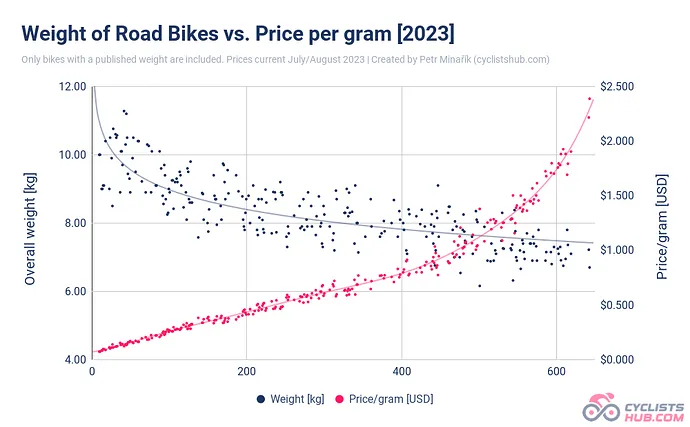
Weight / Price Chart