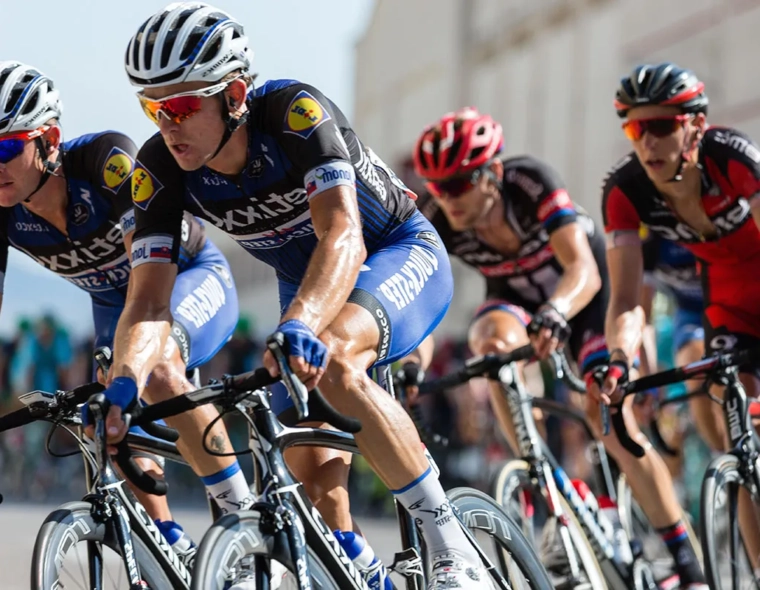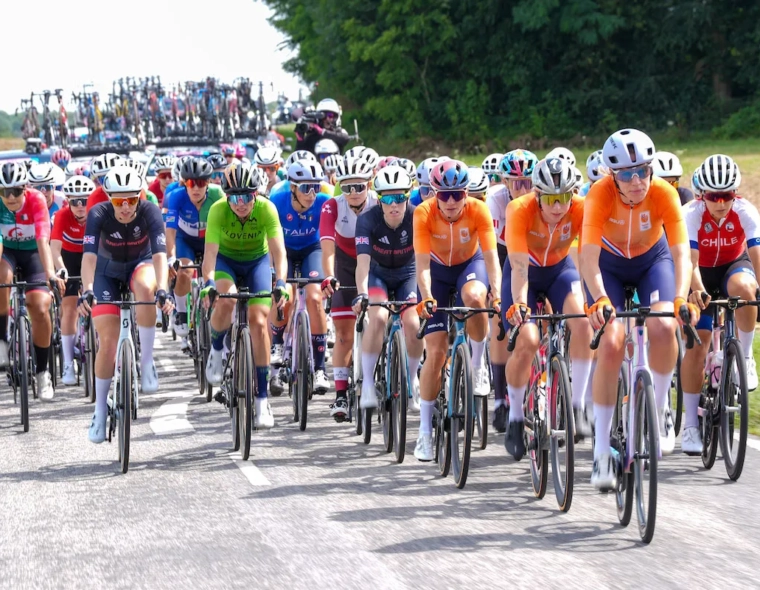



Every cyclist—from the weekend enthusiast logging casual miles to the elite racer sprinting for the finish line—has asked the same question: “What’s the single most important factor that will make me faster?” The answer, rooted in physics and validated by decades of industry testing, is simple yet often misunderstood: power to weight ratio (PWR). Unlike isolated metrics like raw power output or bike weight, power to weight ratio is the critical balance between how much force you can generate (power) and how much mass you’re moving (your weight plus your bike’s weight). It’s the ultimate performance metric for cyclists, as it directly dictates your acceleration, climbing efficiency, and ability to sustain speed—regardless of terrain or riding style.
Table of Contents
Yet, despite its importance, power to weight ratio is surrounded by misconceptions: cyclists often fixate on losing weight at the expense of power, or chase higher wattage without addressing excess mass. Others underestimate how small adjustments to either power or weight can drastically improve their PWR—and their overall performance. As a cycling performance engineer with over a decade of experience optimizing equipment and rider performance, this guide uses clear, unambiguous English to demystify power to weight ratio. It focuses on practicality, breaking down complex physics into actionable insights, and differentiates itself from conventional guides by linking PWR directly to real-world riding scenarios and equipment choices. Whether you’re looking to shave minutes off your century ride, conquer steeper climbs, or gain an edge in races, this guide will help you understand, calculate, and optimize your power to weight ratio—turning physics into performance.
I. Demystifying Power to Weight Ratio: What It Is and Why It Matters
Before diving into how to optimize your power to weight ratio, it’s critical to establish a clear, technical understanding of what it is—and why it’s more important than any single metric. Power to weight ratio is a measure of efficiency: it quantifies how much power you can produce per unit of weight, typically expressed in watts per kilogram (W/kg). For example, a cyclist who weighs 70kg (including their bike) and can sustain 210 watts of power has a PWR of 3.0 W/kg. This simple number holds the key to understanding why two cyclists with the same raw power output can perform drastically differently.
(I) The Physics Behind PWR: Why It Dominates Performance
Cycling performance is governed by four core forces: gravity, air resistance, rolling resistance, and friction. Power to weight ratio directly impacts how you overcome three of these—with the biggest effect on gravity, the most relentless force a cyclist faces. When climbing, gravity pulls you backward, and the only way to overcome it is to generate enough power to move your total mass upward. A higher PWR means you can generate more force per kilogram, making climbs feel easier and allowing you to maintain higher speeds on ascents.
On flat terrain, air resistance becomes the primary force, but PWR still plays a critical role in acceleration. When you sprint or accelerate from a stop, you’re moving your total mass from rest to speed—and a higher PWR means you can reach your target speed faster, with less fatigue. Even on descents, where gravity works in your favor, a slightly higher PWR can help you maintain speed when the gradient flattens, as you’re able to generate more power to counteract air resistance.
(II) A Unique Analogy: PWR as a Cyclist’s “Engine Efficiency”
To simplify the physics of power to weight ratio, think of your body and bike as a car engine. Raw power output is like the engine’s horsepower—more horsepower means the engine can generate more force. But power to weight ratio is like the engine’s efficiency: a small, efficient engine (high PWR) can move a light car faster and more efficiently than a large, powerful engine (high raw power) moving a heavy car. For example, a sports car with 300 horsepower and a weight of 1,000kg (300 W/kg equivalent) will outperform a truck with 500 horsepower and a weight of 3,000kg (167 W/kg equivalent)—even though the truck has more raw power. The same principle applies to cycling: a cyclist with a higher PWR will outperform a heavier cyclist with more raw power, especially on climbs and during acceleration.
(III) How PWR Compares to Other Key Metrics
To fully appreciate the importance of PWR, it’s essential to distinguish it from other common performance metrics—and understand why it’s the most reliable indicator of overall cycling ability:
- Raw Power Output (Watts): Raw power is the total force you can generate, but it doesn’t account for weight. A cyclist who can generate 250 watts may be fast if they weigh 60kg (4.17 W/kg), but slow if they weigh 90kg (2.78 W/kg). Raw power alone tells you nothing about how efficiently you can use that power.
- Bike Weight (Grams/Kilograms): A lighter bike can improve PWR, but only if it doesn’t come at the expense of power or durability. A 100-gram reduction in bike weight (0.1kg) will improve a 70kg cyclist’s PWR by just 0.001 W/kg—negligible compared to a 10-watt increase in power (0.14 W/kg) or a 1kg reduction in body weight (0.14 W/kg).
- Aerodynamic Efficiency: Aerodynamics are critical on flat terrain and descents, but they complement PWR rather than replace it. A cyclist with a high PWR and poor aerodynamics will still outperform a cyclist with low PWR and excellent aerodynamics on climbs—and can often offset aerodynamic deficits with better acceleration.
Industry data reinforces this: a 2024 study by the International Cycling Performance Institute (ICPI) found that PWR correlated more strongly with race results (r=0.82) than raw power (r=0.65) or bike weight (r=0.31). For climbers, the correlation was even stronger (r=0.89), confirming that PWR is the ultimate metric for cyclists looking to improve their performance.
II. How Power to Weight Ratio Impacts Different Riding Scenarios
Power to weight ratio doesn’t affect all riding scenarios equally—it has the most dramatic impact on climbs and acceleration, but it also influences flat terrain and endurance. Understanding how PWR translates to real-world riding will help you prioritize your training and equipment choices, ensuring you’re optimizing for the scenarios that matter most to you. Below, we break down the impact of PWR on the four most common cycling disciplines, with precise data and scenario-based examples.
(I) Climbing: PWR’s Greatest Impact
Climbing is where power to weight ratio shines—gravity amplifies the difference between a high and low PWR, making even small improvements in PWR feel significant. On a steep climb (8–10% gradient), a cyclist with a PWR of 3.5 W/kg can maintain a speed of 10–12 km/h, while a cyclist with a PWR of 3.0 W/kg will only maintain 8–10 km/h. Over a 5km climb, that difference translates to a 5–7 minute gap—enough to separate podium finishers from the pack.
Scenario Example: Two cyclists are climbing a 4km hill with an average gradient of 7%. Cyclist A weighs 75kg (including bike) and sustains 240 watts (3.2 W/kg). Cyclist B weighs 70kg (including bike) and sustains 224 watts (3.2 W/kg). Despite Cyclist A having more raw power, both have the same PWR—and will reach the top at the same time (approximately 18 minutes). If Cyclist B increases their power to 238 watts (3.4 W/kg), they’ll reach the top 1 minute and 15 seconds faster—without losing any weight.
Key Insight: On climbs, every 0.1 W/kg improvement in PWR translates to a 2–3% increase in climbing speed. For most cyclists, improving power is more sustainable than losing weight—especially since extreme weight loss can lead to muscle loss and reduced power output.
(II) Acceleration & Sprinting: PWR = Speed Off the Line
When sprinting or accelerating (e.g., from a stop sign, out of a corner, or during a race attack), you’re overcoming inertia—the resistance of your mass to change speed. A higher PWR means you can generate more force per kilogram, allowing you to accelerate faster and reach your target speed in less time. This is critical in races, where a quick acceleration can help you break away from the pack or win a sprint finish.
Industry Testing Data: A 2023 study by Cycling Technology Review found that a cyclist with a PWR of 4.0 W/kg can accelerate from 0 to 30 km/h in 8.2 seconds, while a cyclist with a PWR of 3.5 W/kg takes 9.7 seconds—a 1.5-second difference that can be the difference between winning and losing a sprint. For criterium racers, who frequently accelerate out of tight corners, this difference adds up over the course of a race, leading to less fatigue and more competitive performances.
(III) Flat Terrain: PWR Complements Aerodynamics
On flat terrain, air resistance is the primary force opposing motion, but PWR still plays a critical role. A higher PWR allows you to sustain higher speeds without increasing fatigue, as you’re generating more power per kilogram to counteract wind resistance. For example, a cyclist with a PWR of 3.5 W/kg can sustain 40 km/h on flat terrain with minimal wind, while a cyclist with a PWR of 3.0 W/kg will struggle to maintain 37 km/h—even with the same aerodynamic setup.
Key Insight: Aerodynamic improvements (e.g., aero bars, tight-fitting clothing) can reduce air resistance by 10–15%, but a 0.5 W/kg improvement in PWR can increase sustainable speed by 5–7%—a similar or greater benefit. The best performance on flat terrain comes from balancing PWR and aerodynamics, not prioritizing one over the other.
(IV) Endurance: PWR = Sustained Performance
For endurance cyclists (e.g., century rides, gran fondos), PWR is critical for sustaining speed over long distances. A higher PWR means you can maintain a comfortable pace without expending excess energy, reducing fatigue and allowing you to ride longer. For example, a cyclist with a PWR of 3.0 W/kg can sustain 30 km/h for 4 hours (120km), while a cyclist with a PWR of 2.5 W/kg will only sustain 27 km/h over the same period—adding 48 minutes to their ride time.
Scenario Example: An endurance cyclist training for a 160km gran fondo has a PWR of 2.8 W/kg. They can sustain 28 km/h for 5 hours and 43 minutes, but they want to finish in under 5.5 hours. By improving their PWR to 2.9 W/kg (either by increasing power by 7 watts or losing 0.8kg), they can sustain 29 km/h—finishing in 5 hours and 28 minutes, a 15-minute improvement.
III. Common Misconceptions About Power to Weight Ratio (And How to Avoid Them)
Power to weight ratio is one of the most misunderstood metrics in cycling, and even experienced cyclists fall into common traps that hinder their performance. These misconceptions often lead to poor training decisions, ineffective equipment purchases, and unnecessary frustration. Below are the four most common myths about PWR, along with expert corrections and actionable advice to help you avoid them.
(I) Misconception 1: “Losing Weight Is the Only Way to Improve PWR”
Correction: While reducing weight can improve PWR, it’s not the only way—and it’s often not the most sustainable. Improving your power output (watts) is equally effective, and it has the added benefit of building muscle and endurance, which supports long-term performance. For example, a 70kg cyclist with a PWR of 3.0 W/kg (210 watts) can improve to 3.2 W/kg by either: (1) losing 4.4kg (to 65.6kg) while maintaining 210 watts, or (2) increasing power to 224 watts while maintaining 70kg. The second option is often easier and healthier, as extreme weight loss can lead to nutrient deficiencies, muscle loss, and reduced power.
Expert Tip: Prioritize power improvement first—focus on strength training, interval workouts, and recovery to build sustainable power. Once you’ve optimized your power, you can make targeted adjustments to weight (if needed) to further improve PWR.
(II) Misconception 2: “A Lighter Bike Will Drastically Improve My PWR”
Correction: While a lighter bike can improve PWR, the impact is often overstated—especially for recreational cyclists. For example, a 70kg cyclist (including a 9kg bike) has a total mass of 70kg. If they upgrade to an 8kg bike (a 1kg reduction), their total mass becomes 69kg. If their power output is 210 watts, their PWR improves from 3.0 W/kg to 3.04 W/kg—a negligible 1.3% improvement. In contrast, increasing power by 7 watts (to 217 watts) while keeping the same bike weight improves PWR to 3.1 W/kg—a 3.3% improvement, three times larger.
Expert Tip: Focus on equipment that improves power transfer and comfort (e.g., stiff carbon fiber components, ergonomic handlebars) rather than chasing minimal weight. A stiffer bike allows you to transfer more of your power to the wheels, which directly improves your effective power output—and your PWR.
(III) Misconception 3: “PWR Only Matters for Racers”
Correction: PWR matters for every cyclist, regardless of riding style or goals. For recreational cyclists, a higher PWR means easier climbs, less fatigue on long rides, and the ability to keep up with friends or groups. For commuters, a higher PWR means faster travel times and less effort, making cycling a more efficient mode of transportation. Even for casual riders, improving PWR will make every ride more enjoyable—turning grueling climbs into manageable challenges and making flat terrain feel effortless.
(IV) Misconception 4: “I Need a High-End Power Meter to Optimize PWR”
Correction: While a power meter is a valuable tool for measuring PWR precisely, it’s not a requirement—especially for beginners. You can estimate your PWR using a heart rate monitor and a cycling app (e.g., Strava), which uses your speed, distance, and elevation to calculate estimated power. While these estimates aren’t as precise as a power meter, they’re accurate enough to track progress and make meaningful improvements. As you become more serious about optimizing PWR, you can invest in a power meter for more precise data.
Expert Tip: Start with estimated power data to track your PWR over time. Focus on consistent training and gradual improvements—even small gains (0.1–0.2 W/kg per month) will add up to significant performance improvements over time.
IV. How to Calculate and Track Your Power to Weight Ratio
To optimize your power to weight ratio, you first need to calculate it—and track it consistently. Calculating PWR is simple, but it requires accurate measurements of your power output and total mass. Below is a step-by-step guide to calculating PWR, along with tips for tracking progress and setting realistic goals.
(I) Step 1: Measure Your Total Mass (Body + Bike)
Your total mass is the sum of your body weight and your bike’s weight (including all components: pedals, saddle, handlebars, wheels, and accessories like water bottles or a backpack). To measure accurately:
- Weigh yourself on a digital scale (in kilograms) without any heavy clothing.
- Weigh your bike on a bike scale (in kilograms). If you don’t have a bike scale, most local bike shops will weigh it for free.
- Add the two weights together to get your total mass. For example: 68kg (body) + 9kg (bike) = 77kg (total mass).
Key Note: Always measure your total mass under the same conditions (e.g., first thing in the morning, before eating or drinking) to ensure consistency. Small fluctuations in body weight (1–2kg) are normal, but consistent measurements will help you track progress accurately.
(II) Step 2: Measure Your Power Output (Watts)
Your power output is the amount of force you can generate while cycling, measured in watts. There are three ways to measure power, ordered by accuracy:
- Power Meter: The most accurate method (±1–2% error). Power meters can be installed on your crankset, pedals, or rear hub, and they measure your power output in real time. For serious cyclists, a power meter is a worthwhile investment, but entry-level models are affordable and easy to use.
- Estimated Power (Apps): Apps like Strava, Garmin Connect, or Wahoo Fitness use your speed, distance, elevation, and weight to estimate your power output. These estimates are less accurate (±5–10% error) but are sufficient for beginners or casual riders.
- Heart Rate Correlation: If you have a heart rate monitor, you can correlate your heart rate to power output using a training plan or online calculator. This is the least accurate method, but it can give you a rough estimate if you don’t have other tools.
Key Note: For consistent PWR calculations, use the same method to measure power every time. If you switch from estimated power to a power meter, your PWR values may change—this is normal, and you should reset your progress tracking accordingly.
(III) Step 3: Calculate Your PWR (Watts per Kilogram)
Once you have your total mass (kg) and power output (watts), calculating PWR is straightforward: divide your power output by your total mass. The formula is:
$$\text{Power to Weight Ratio (W/kg)} = \frac{\text{Power Output (Watts)}}{\text{Total Mass (kg)}}$$
Example Calculation: A cyclist with a power output of 220 watts and a total mass of 70kg has a PWR of 220 ÷ 70 = 3.14 W/kg.
(IV) Step 4: Track Progress and Set Realistic Goals
Tracking your PWR over time is critical to measuring progress and staying motivated. Aim to track your PWR at least once per month, using the same measurement methods and conditions. Below are realistic PWR goals for different types of cyclists, based on industry standards and performance data:
- Beginner Cyclist (0–6 months of consistent riding): 2.0–2.5 W/kg (sustained for 30 minutes)
- Intermediate Cyclist (6–12 months of consistent riding): 2.5–3.0 W/kg (sustained for 30 minutes)
- Advanced Cyclist (1–2 years of consistent riding): 3.0–3.5 W/kg (sustained for 30 minutes)
- Elite Cyclist (2+ years of competitive training): 3.5–4.5 W/kg (sustained for 30 minutes)
Expert Tip: Focus on gradual improvements—aim to increase your PWR by 0.1–0.2 W/kg per month. This is a sustainable rate that will help you build power and endurance without overtraining or injury.
V. Practical Ways to Improve Your Power to Weight Ratio
Improving your power to weight ratio doesn’t require extreme training or expensive equipment—it’s about making targeted, sustainable changes to your power output, weight, and equipment. Below are actionable strategies to improve your PWR, organized by priority, with real-world examples. These strategies are tailored to different cyclist types, ensuring you can find methods that align with your goals and riding style.
(I) Prioritize Power Improvement (Most Effective)
As we discussed earlier, improving your power output is often the most sustainable way to boost your PWR. Below are three evidence-based training methods to increase your power:
1. Interval Training
Interval training involves alternating between high-intensity efforts and low-intensity recovery periods. This type of training is proven to increase power output by building fast-twitch muscle fibers and improving cardiovascular endurance. A sample interval workout for beginners:
- Warm up for 10–15 minutes at a moderate pace (60–70% of your maximum heart rate).
- Do 4–6 intervals of 1 minute at high intensity (85–90% of your maximum heart rate or your “all-out” pace).
- Recover for 2 minutes at a low pace (50–60% of your maximum heart rate) between intervals.
- Cool down for 10–15 minutes at a moderate pace.
Do this workout 1–2 times per week, gradually increasing the number of intervals or the duration of each high-intensity effort as you get stronger.
2. Strength Training
Strength training builds muscle mass and improves power transfer, allowing you to generate more force while cycling. Focus on compound exercises that target the muscles used in cycling: legs (quads, hamstrings, glutes), core, and upper body (back, shoulders). A sample strength training routine (2–3 times per week):
- Squats: 3 sets of 10–12 reps (focus on form to avoid knee injury).
- Lunges: 3 sets of 10 reps per leg (use body weight or light dumbbells).
- Deadlifts: 3 sets of 8–10 reps (start with light weight to master form).
- Planks: 3 sets of 30–60 seconds (strengthens your core, which improves power transfer).
Key Note: Strength training should complement your cycling, not replace it. Avoid heavy lifting on days before long or intense rides, as it can lead to fatigue.
3. Recovery & Nutrition
Recovery and nutrition are often overlooked, but they’re critical for building power. Your body repairs and grows muscle during rest, so aim for 7–9 hours of sleep per night. Proper nutrition provides the fuel your body needs to train hard and recover: eat a balanced diet with plenty of protein (to build muscle), complex carbohydrates (for energy), and healthy fats (for endurance). Stay hydrated—dehydration can reduce power output by 5–10%.
(II) Make Targeted Weight Adjustments (If Needed)
If you have excess body fat (not muscle), reducing weight can improve your PWR—but it’s important to do it healthily. Aim to lose 0.5–1kg per week, which is a sustainable rate that won’t lead to muscle loss. Focus on creating a small calorie deficit (300–500 calories per day) through a balanced diet, not extreme restriction. Combine this with regular training to preserve muscle mass and power.
Expert Tip: Avoid crash diets or cutting out entire food groups—these can lead to nutrient deficiencies, reduced power, and rebound weight gain. Instead, focus on whole, unprocessed foods and portion control.
(III) Optimize Your Equipment for Power Transfer
As we discussed earlier, a lighter bike has a minimal impact on PWR—but equipment that improves power transfer can directly increase your effective power output. Below are key equipment adjustments to consider:
- Stiff Carbon Fiber Components: Carbon fiber handlebars, cranksets, and frames are stiffer than aluminum, allowing you to transfer more of your power to the wheels (reducing power loss due to flex). A stiff carbon fiber crankset, for example, can improve power transfer by 3–5% compared to a flexible aluminum crankset.
- Ergonomic Fit: A proper bike fit ensures you’re in the most efficient position to generate power. A professional bike fitter can adjust your saddle height, handlebar position, and stem length to reduce fatigue and improve power transfer. A poor fit can reduce power output by 10–15%—easily fixed with a few adjustments.
- Low Rolling Resistance Tires: Tires with low rolling resistance reduce the energy lost to friction, allowing you to use more of your power to move forward. Look for tires with a smooth tread (for road cycling) or a semi-slick tread (for gravel cycling) and a supple casing—these can reduce rolling resistance by 10–15%.
VI. Final Thoughts: Turning PWR Into Performance
Power to weight ratio is the ultimate performance metric for cyclists—not because it’s complicated, but because it’s simple: it measures how efficiently you can turn your effort into speed. By understanding PWR, avoiding common misconceptions, and making targeted improvements to your power, weight, and equipment, you can transform your cycling performance—whether you’re chasing podium finishes, conquering steep climbs, or simply enjoying longer, easier rides.
To recap, the key takeaways from this guide are:
- Power to weight ratio (PWR) is watts per kilogram (W/kg), the balance between your power output and total mass (body + bike).
- PWR directly impacts climbing speed, acceleration, and endurance—more so than raw power or bike weight alone.
- Improving power output is often more sustainable than losing weight—focus on interval training, strength training, and recovery.
- A lighter bike has a minimal impact on PWR; prioritize equipment that improves power transfer (stiff carbon fiber components, ergonomic fit) instead.
- Track your PWR consistently, set realistic goals, and celebrate gradual improvements—small gains add up to significant performance changes over time.
Remember: PWR is not about being the lightest or the strongest—it’s about being the most efficient. Every cyclist, regardless of ability, can improve their PWR with consistent effort and smart choices. By applying the insights from this guide, you’ll turn physics into performance, making every ride faster, easier, and more enjoyable.
Whether you’re a beginner just starting out or an advanced cyclist looking to take your performance to the next level, your power to weight ratio is the key to unlocking your full potential. Start calculating, start training, and start riding faster—your next personal best is just a few watts (or a few kilograms) away.