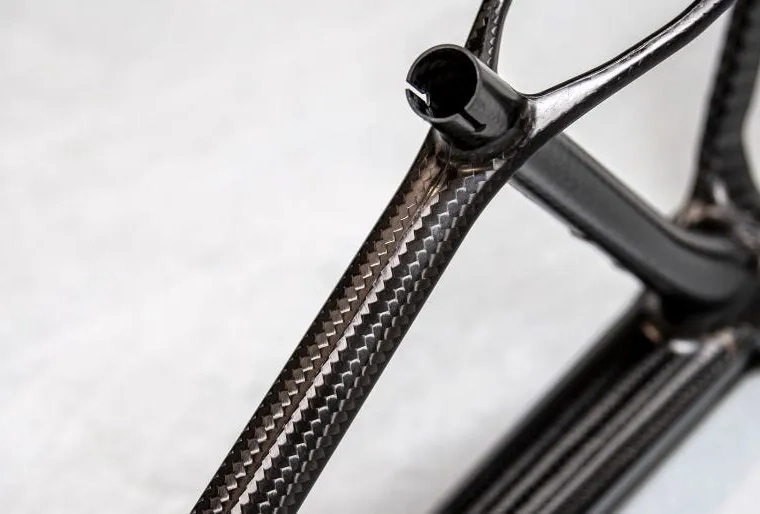



Every cyclist—whether a casual weekend rider, a dedicated commuter, or a competitive enthusiast—has experienced the frustration of a poorly fitting bike saddle. A subpar saddle doesn’t just cause discomfort; it undermines performance, distracts from the joy of riding, and can even lead to long-term discomfort or injury over extended miles. For riders of carbon road bikes, in particular, where every component is engineered to balance weight, rigidity, and efficiency, the saddle is often an overlooked yet critical piece that bridges the gap between rider and machine. Choosing the right saddle isn’t about “one size fits all” or chasing the latest trends—it’s about understanding your body, your riding style, and the technical attributes that align comfort with performance. This guide, crafted from years of industry experience in carbon fiber bicycle technology and rider ergonomics, breaks down the science, key considerations, and actionable steps to help you select a saddle that supports your goals, reduces fatigue, and enhances every ride.
Table of Contents
Why the Right Saddle Matters More Than You Think
Before diving into the specifics of saddle selection, it’s essential to clarify why this component deserves your full attention—especially for riders who prioritize performance, as many carbon road bike enthusiasts do. The saddle is the primary point of contact between your body and the bike, bearing 60-75% of your weight when riding (the remaining weight is distributed between the handlebars and pedals). Unlike other components, which can be swapped for marginal gains, a poorly fitting saddle creates a bottleneck: no matter how advanced your frame, wheels, or drivetrain, discomfort will limit your endurance, power output, and overall riding experience.
Consider this analogy—one I’ve used with countless riders to simplify the concept: A bike saddle is like a pair of running shoes. You wouldn’t buy a random pair of shoes based solely on looks; you’d consider your foot shape, stride, and the type of running you do (road, trail, sprint). A saddle works the same way: it must align with your pelvic structure, riding posture, and intended use to distribute weight evenly, reduce pressure on sensitive areas, and allow you to pedal efficiently. For carbon road bike riders, who often spend hours in a dropped position (leaning forward to reduce wind resistance), the saddle’s design becomes even more critical—poor fit can lead to numbness, soreness, or lower back pain, forcing you to cut rides short or compromise your riding position to find relief.
值得注意的是,comfort and performance are not opposing goals when it comes to saddle selection. A common misconception is that a “performance saddle” must be hard, narrow, and uncomfortable, while a “comfort saddle” is soft, wide, and slow. This is simply untrue. Modern saddle engineering—especially for high-performance applications like carbon road bikes—balances rigidity (to transfer power efficiently) with targeted padding (to reduce pressure) and ergonomic shaping (to fit the rider’s anatomy). The right saddle will keep you comfortable for hours, allowing you to maintain a consistent riding position and maximize power output—turning comfort into a performance advantage.
Key Technical Attributes to Evaluate in a Bike Saddle
When selecting a saddle, there are four core technical attributes that drive both comfort and performance: width, shape, padding, and material. Each of these factors is interconnected, and their importance varies based on your body type, riding style, and the type of bike you ride (e.g., carbon road bike vs. endurance bike vs. gravel bike). Below is a detailed breakdown of each attribute, including how to assess what works for you and common pitfalls to avoid.
1. Saddle Width: The Foundation of Fit
Saddle width is the most fundamental factor in ensuring a proper fit, yet it’s also the most commonly misunderstood. Width is not a matter of personal preference—it’s determined by your sit bone width (the distance between the two bony protrusions at the bottom of your pelvis, known as the ischial tuberosities). These sit bones are what bear the majority of your weight when riding, so the saddle must be wide enough to support them without being so wide that it causes friction or pressure on the inner thighs.
How to measure your sit bone width: This is a simple, actionable step you can take at home with minimal tools. Place a piece of cardboard on a flat chair, sit on it with your weight evenly distributed (as you would on a bike), and mark the two indentations left by your sit bones. Measure the distance between the centers of these two marks—this is your sit bone width. For reference, most adult riders have a sit bone width between 120mm and 160mm, with women typically having wider sit bones than men (though this is not a hard rule).
The general guideline for saddle width is: select a saddle that is 20-30mm wider than your sit bone width. This extra width ensures that your sit bones are fully supported without extending beyond the saddle’s edges, which would cause chafing against your inner thighs. For carbon road bike riders, who often ride in a more aggressive, forward-leaning position, the sit bones bear slightly less weight (some weight shifts to the pubic rami), so a saddle that is at the narrower end of the recommended range may be more appropriate—this reduces wind resistance and allows for a more efficient pedaling motion.
Common误区: Many riders assume that a wider saddle is always more comfortable. This is a dangerous misconception. A saddle that is too wide will cause your inner thighs to rub against the edges of the saddle during pedaling, leading to chafing, irritation, and discomfort over time. Conversely, a saddle that is too narrow will not support your sit bones adequately, concentrating pressure on a small area and leading to numbness or soreness. For example, a rider with a 140mm sit bone width who chooses a 130mm saddle will likely experience pressure points, while the same rider choosing a 170mm saddle will face chafing issues.
2. Saddle Shape: Matching to Your Riding Posture
Saddle shape—specifically the profile (curvature) and cutout design—plays a critical role in aligning with your riding posture and reducing pressure on sensitive areas. The shape of the saddle should complement the angle of your pelvis when riding, which is determined by your bike’s geometry and your preferred riding position. For carbon road bike riders, there are two primary riding postures that influence saddle shape selection: aggressive (racing) posture and endurance posture.
Aggressive (Racing) Posture: Riders in this position lean forward significantly, with their hands on the drops or hoods, and their pelvis rotated forward. This posture shifts weight from the sit bones to the pubic area, so a saddle with a narrow, streamlined profile (often called a “race saddle”) is ideal. These saddles are typically flat or slightly curved upward at the front (nose), allowing for easy movement forward and backward as you shift positions during a ride. They also tend to have a narrower nose to reduce friction with the inner thighs when pedaling at high cadences.
Endurance Posture: Riders in this position (common for long-distance carbon road bike rides or endurance-focused bikes) sit more upright, with a more neutral pelvic angle. This posture keeps more weight on the sit bones, so a saddle with a slightly wider profile and a curved or contoured shape is better. These saddles often have a more pronounced curve (called “profiled” or “anatomic”) to cradle the sit bones and distribute weight evenly. The nose may be slightly wider or shorter to provide additional support when sitting upright.
Cutout Design: A key feature in modern saddle design is the cutout (a hollow or recessed area in the center of the saddle). Cutouts are engineered to reduce pressure on the perineal area (the soft tissue between the sit bones and genitals), which can become compressed during riding—leading to numbness, tingling, or discomfort. For riders in aggressive positions (carbon road bike racers, for example), cutouts are particularly beneficial, as they alleviate pressure on the pubic rami.
There are three main types of cutouts to consider: (1) Full cutout: A large, continuous recess from the nose to the back of the saddle, offering maximum pressure relief; (2) Partial cutout: A smaller recess in the middle or rear of the saddle, balancing pressure relief with rigidity; (3) Channel: A narrow groove along the center of the saddle, providing moderate pressure relief while maintaining structural integrity. The right cutout for you depends on your body type—riders with wider sit bones may prefer a full cutout, while those with narrower sit bones may find a channel sufficient.
Key区别在于: The shape of the saddle is not just about comfort—it directly impacts performance. A saddle that is too curved for an aggressive riding position will force you to slide forward, compromising your pedaling efficiency and straining your lower back. A saddle that is too flat for an endurance position will not support your sit bones, leading to fatigue and discomfort during long rides.
3. Padding: Balance Between Comfort and Rigidity
Padding is often the first feature riders notice when evaluating a saddle, but it’s also the most overrated in terms of “more = better.” The goal of saddle padding is not to provide a “cushy” feel (like a couch cushion) but to distribute weight evenly, absorb small vibrations, and reduce pressure on sensitive areas—without sacrificing rigidity (which is critical for power transfer, especially on carbon road bikes).
For carbon road bike riders, rigidity is key: a saddle with too much soft padding will compress under your weight during pedaling, creating a “sinking” feeling that wastes energy and reduces efficiency. Conversely, a saddle with too little padding will not absorb vibrations or distribute pressure, leading to discomfort over rough roads or long distances. The ideal padding is dense, supportive, and targeted—focused on the areas where your sit bones make contact, with minimal padding in the nose (to reduce friction) and center (to align with cutouts or channels).
There are two main types of saddle padding materials, each with distinct properties:
- Foam Padding: The most common material used in saddles, foam comes in varying densities (measured in kg/m³). Higher-density foam (100-150 kg/m³) is stiffer, more durable, and better for performance-focused riders (like carbon road bike enthusiasts), as it maintains its shape under pressure and provides targeted support. Lower-density foam (50-100 kg/m³) is softer, more comfortable for short rides, but tends to compress over time and is less ideal for long-distance or high-performance riding.
- Gel Padding: Gel is a flexible, shock-absorbent material that conforms to your body shape, providing excellent pressure relief for short to medium rides. However, gel padding is less rigid than foam, which can compromise power transfer on carbon road bikes. It also tends to retain heat and can become less supportive over time (especially in hot weather). Gel is best suited for casual riders or those who experience frequent numbness, but it’s not ideal for competitive or long-distance carbon road bike riding.
场景化参考: Imagine riding a carbon road bike over a stretch of rough asphalt. A saddle with dense foam padding will absorb small vibrations from the road, reducing fatigue in your sit bones and lower back, while maintaining rigidity to transfer every watt of power from your legs to the pedals. A saddle with soft gel padding, by contrast, will compress excessively over the same road, wasting energy and leaving you feeling sore after just an hour of riding.
4. Saddle Material: Durability, Weight, and Performance
The materials used in the saddle’s cover, shell, and rails directly impact its durability, weight, rigidity, and comfort—all critical factors for carbon road bike riders, who often prioritize weight savings and performance without sacrificing longevity.
Shell Material
The shell is the base of the saddle, providing structural support and shaping. For performance-focused saddles (like those designed for carbon road bikes), the shell material is chosen for its rigidity-to-weight ratio:
- Carbon Fiber: The premium material for saddle shells, carbon fiber offers exceptional rigidity and lightweight (typically 15-30g lighter than plastic or fiberglass shells). Carbon fiber shells are stiff enough to transfer power efficiently, while also being slightly flexible to absorb small vibrations—striking the perfect balance for carbon road bike riders. They are also highly durable, resistant to impact, and maintain their shape over time. The only downside is cost: carbon fiber shells are more expensive than other materials.
- Nylon/Plastic Composite: A common, cost-effective alternative to carbon fiber, nylon or plastic composite shells are rigid enough for most riders and significantly more affordable. They are often reinforced with fiberglass to improve rigidity and durability. While they are slightly heavier than carbon fiber shells (by 10-20g), they still offer excellent performance for casual and intermediate carbon road bike riders. The main limitation is that they are less flexible than carbon fiber, so they may transmit more vibrations over rough roads.
- Fiberglass: Fiberglass shells are lightweight and moderately rigid, but they are less durable than carbon fiber or nylon composites. They are often used in entry-level saddles and are not ideal for high-performance or long-distance carbon road bike riding, as they can crack or deform under repeated pressure.
Rail Material
The rails are the metal (or carbon fiber) bars that run along the bottom of the saddle, connecting it to the seatpost. They play a key role in weight, rigidity, and adjustability. For carbon road bike riders, weight savings and rigidity are priorities, so the following rail materials are most common:
- Carbon Fiber Rails: Like carbon fiber shells, carbon fiber rails are lightweight (typically 20-40g lighter than metal rails) and rigid, contributing to overall bike weight savings (critical for carbon road bikes, where every gram counts). They also dampen vibrations better than metal rails, improving comfort over long rides. However, they are more expensive and require a seatpost that is compatible with carbon fiber rails (to avoid damaging the rails during installation).
- Titanium Rails: Titanium is a popular middle-ground option, offering a balance of lightweight, rigidity, and durability. Titanium rails are lighter than steel (by 30-50g) and more durable than aluminum, with excellent vibration damping properties. They are compatible with most seatposts and are a good choice for intermediate to advanced carbon road bike riders who want performance without the premium cost of carbon fiber.
- Aluminum Rails: The most common and affordable rail material, aluminum is lightweight and rigid enough for casual riders. However, aluminum rails are heavier than carbon fiber or titanium (by 20-50g) and transmit more vibrations, which can reduce comfort over long rides. They are ideal for entry-level carbon road bike riders or those on a budget.
- Steel Rails: Steel rails are the heaviest option, but they are extremely durable and affordable. They are rarely used in high-performance carbon road bike saddles, as their weight adds unnecessary bulk—though they may be found in entry-level or commuter saddles.
Cover Material
The saddle cover is the outer layer that comes into contact with your body, and it impacts comfort, friction, and durability. For carbon road bike riders, who often sweat during rides (especially in warm weather), the cover material should be breathable, moisture-wicking, and resistant to chafing:
- Synthetic Leather (Vinyl/PVC): The most common cover material, synthetic leather is durable, water-resistant, and easy to clean. It is smooth, reducing friction with cycling shorts, and is available in a variety of colors. However, it is not as breathable as other materials, so it may retain heat and moisture during long rides.
- Genuine Leather: Leather covers are breathable, moisture-wicking, and conform to your body shape over time (creating a custom fit). They are comfortable for long rides and have a premium feel, but they are more expensive, require maintenance (to prevent drying and cracking), and are not water-resistant (they can become stiff when wet).
- Mesh/Fabric: Mesh or fabric covers are highly breathable and moisture-wicking, making them ideal for hot weather or long rides. They are lightweight and comfortable, but they are less durable than synthetic leather and can stretch or tear over time. They are best suited for casual riders or those who prioritize breathability over durability.
How to Match Your Saddle to Your Riding Style and Bike Type
While the technical attributes above are universal, their importance varies based on your riding style and the type of bike you ride. For carbon road bike riders, who often have specific goals (e.g., racing, long-distance endurance, casual riding), matching the saddle to your use case is critical to maximizing comfort and performance. Below is a breakdown of how to tailor your saddle selection to common riding styles:
Racing/Competitive Carbon Road Bike Riding
If you ride a carbon road bike for racing or competitive events (e.g., criteriums, road races, time trials), your priority is efficiency, weight savings, and mobility. Here’s what to look for:
- Width: Narrow (130-145mm), based on your sit bone width (err on the narrower side to reduce wind resistance).
- Shape: Streamlined, flat or slightly upward-curved nose, with a partial or full cutout (to reduce pressure in aggressive positions).
- Padding: Dense foam (100-150 kg/m³), targeted to the sit bone area (minimal padding in the nose and center).
- Materials: Carbon fiber shell and rails (for maximum rigidity and weight savings), synthetic leather cover (for low friction and durability).
场景化需求: In a road race, you’ll spend most of your time in the drops or hoods, shifting positions frequently to draft, sprint, or climb. A narrow, streamlined saddle allows you to move forward and backward easily, while rigid materials ensure that every pedal stroke translates to power. The cutout reduces numbness during long periods in the aggressive position, allowing you to maintain focus and performance.
Long-Distance/Endurance Carbon Road Bike Riding
For riders who use their carbon road bike for long-distance rides (e.g., centuries, gran fondos), comfort is just as important as performance. You’ll spend hours in the saddle, so weight savings take a backseat to pressure distribution and vibration damping. Here’s what to prioritize:
- Width: Slightly wider (140-155mm), based on your sit bone width (ensure full sit bone support).
- Shape: Contoured or curved profile, with a full cutout (for maximum pressure relief), shorter nose (to reduce friction during upright riding).
- Padding: Dense foam with moderate thickness (targeted support + vibration absorption), or a combination of foam and gel (for extra comfort).
- Materials: Carbon fiber or titanium rails (for vibration damping), carbon fiber or nylon composite shell (balance of rigidity and comfort), breathable synthetic leather or mesh cover (to reduce moisture buildup).
Casual/Commuter Carbon Road Bike Riding
If you ride your carbon road bike casually (e.g., weekend rides, commuting), your priority is comfort and durability. You may ride in a more upright position, and you’re less concerned with weight savings. Here’s what to look for:
- Width: Moderate to wide (145-160mm), based on your sit bone width (maximum comfort).
- Shape: Contoured profile, partial cutout or channel (moderate pressure relief), wider nose (for additional support).
- Padding: Medium-density foam or gel (for a comfortable feel), full coverage (to distribute weight evenly).
- Materials: Aluminum or titanium rails (affordable and durable), nylon composite shell (cost-effective), synthetic leather cover (easy to clean).
Step-by-Step Guide to Choosing Your Perfect Saddle
Now that you understand the key technical attributes and how they align with your riding style, here’s a step-by-step process to select a saddle that fits your body, your bike, and your goals. This process is designed to be actionable, eliminating guesswork and ensuring you make an informed decision—whether you’re shopping online or in a store.
Step 1: Measure Your Sit Bone Width
As outlined earlier, your sit bone width is the foundation of saddle fit. Follow these steps to measure it accurately:
- Gather materials: A piece of cardboard (at least 30cm x 30cm), a pen or marker, and a measuring tape (metric).
- Place the cardboard on a flat, hard chair (avoid soft cushions, which will distort the indentations).
- Sit on the cardboard with your weight evenly distributed between your two sit bones—imagine you’re sitting on your bike, with your back straight and your feet flat on the floor.
- Sit for 30-60 seconds to ensure the indentations are clear.
- Stand up and mark the center of each indentation (the deepest part of the mark).
- Measure the distance between the two marks (in millimeters)—this is your sit bone width.
Pro tip: If you’re between measurements (e.g., 142mm), round up to the nearest 5mm—this ensures you have enough support without going too wide.
Step 2: Determine Your Riding Posture
Your riding posture (aggressive vs. endurance vs. casual) will dictate the shape and profile of the saddle you need. To determine your posture:
- Take a photo of yourself riding your carbon road bike (ask a friend to take it from the side).
- Look at the angle of your back: If your back is nearly parallel to the ground (leaning forward sharply), you have an aggressive posture. If your back is at a 45-60 degree angle to the ground, you have an endurance posture. If your back is nearly upright, you have a casual posture.
Alternatively, consider how you feel when riding: If you often feel pressure in your pubic area, you likely have an aggressive posture (need a saddle with a cutout and narrow profile). If you feel soreness in your sit bones, you may have an endurance or casual posture (need a wider, more contoured saddle).
Step 3: Narrow Down Your Options Based on Technical Attributes
Using your sit bone width and riding posture, narrow down your saddle options by focusing on the four core attributes:
- Width: Select a saddle 20-30mm wider than your sit bone width (narrower for aggressive posture, wider for endurance/casual).
- Shape: Choose a streamlined profile with a cutout for aggressive posture; contoured profile with a full cutout for endurance; contoured profile with a channel for casual.
- Padding: Dense foam for aggressive/endurance; foam or gel for casual.
- Materials: Carbon fiber/titanium for performance; aluminum/nylon for budget/casual.
需重点关注的是: Most saddle manufacturers provide a “fit guide” on their websites, which maps sit bone width to saddle width and riding posture to saddle shape. Use these guides to further narrow your options—they are a valuable tool for ensuring compatibility.
Step 4: Test the Saddle (If Possible)
The best way to ensure a saddle fits is to test it. While online shopping is convenient, testing a saddle in person (or renting one) can save you time and money in the long run. Here’s how to test a saddle effectively:
- Visit a local bike shop that offers saddle testing or rental programs. Many shops have demo saddles that you can ride for a few days to test comfort and fit.
- Adjust the saddle height and angle to your preferred position (this will impact how the saddle feels—even a well-fitting saddle will be uncomfortable if it’s too high, too low, or tilted incorrectly).
- Ride the saddle for at least 30-60 minutes, over a variety of roads (smooth and rough) to test comfort, pressure relief, and vibration damping.
- Pay attention to how your body feels: Are your sit bones supported? Do you feel numbness or soreness in sensitive areas? Is there any chafing against your inner thighs?
If you can’t test the saddle in person (e.g., shopping online), read customer reviews from riders with similar sit bone width and riding style. Look for reviews that mention comfort over long rides, pressure relief, and durability—these are more valuable than generic “good saddle” comments.
Step 5: Adjust Your Saddle for Optimal Fit
Even the best saddle will not perform well if it’s not adjusted correctly. Once you’ve selected a saddle, take the time to adjust its height, angle, and fore-aft position to match your body and riding style. Here are the key adjustments:
- Height: The saddle height should be adjusted so that when your foot is at the bottom of the pedal stroke (3 o’clock position), your knee is slightly bent (25-30 degree angle). A saddle that is too high will cause you to rock your hips, leading to discomfort; a saddle that is too low will strain your knees and reduce pedaling efficiency.
- Angle: The saddle should be level (parallel to the ground) for most riders. Some riders prefer a slight tilt (1-2 degrees upward or downward) to reduce pressure—experiment with small adjustments to find what feels best. Avoid tilting the saddle too far forward (this will cause you to slide forward) or too far backward (this will strain your lower back).
- Fore-Aft Position: The saddle should be positioned so that your knee (when bent at 90 degrees, with your foot on the pedal at the 3 o’clock position) is directly above the pedal spindle. This ensures proper weight distribution and pedaling efficiency. Adjust the saddle forward or backward in small increments (5-10mm) to find the sweet spot.
Common Saddle Myths and Misconceptions (Debunked)
Throughout my experience advising riders on saddle selection, I’ve encountered countless myths and misconceptions that lead to poor purchasing decisions. Below are the most common ones, along with expert debunking to help you avoid mistakes:
Myth 1: A Wider Saddle Is Always More Comfortable
Debunked: As discussed earlier, saddle width is determined by sit bone width—not personal preference. A saddle that is too wide will cause chafing between the inner thighs during pedaling, leading to discomfort over time. A saddle that is too narrow will not support your sit bones, causing pressure points and numbness. The most comfortable saddle is the one that matches your sit bone width and riding posture.
Myth 2: Soft, Thick Padding = Maximum Comfort
Debunked: Soft, thick padding compresses under your weight during pedaling, creating a “sinking” feeling that wastes energy and reduces efficiency. It also fails to distribute weight evenly, leading to pressure points. The best padding is dense, supportive, and targeted—focused on the areas where your sit bones make contact. For long rides, dense foam provides better comfort and durability than soft gel or thick padding.
Myth 3: All Saddles Are the Same—It’s Just a Matter of Preference
Debunked: Saddles are engineered for specific body types, riding postures, and use cases. A saddle that works for a casual commuter on an aluminum road bike will not work for a competitive rider on a carbon road bike. The shape, width, padding, and materials are all designed to align with specific needs—ignoring these factors will lead to discomfort and reduced performance.
Myth 4: Carbon Fiber Saddles Are Only for Professional Riders
Debunked: While carbon fiber saddles are more expensive, they offer benefits for all carbon road bike riders—not just professionals. Carbon fiber’s rigidity-to-weight ratio improves power transfer, while its vibration damping properties enhance comfort over long rides. Even casual riders can benefit from a carbon fiber saddle, especially if they prioritize comfort and performance. For riders on a budget, titanium rails and a nylon composite shell offer a similar balance of performance and value.
Myth 5: You’ll Get Used to Any Saddle Over Time
Debunked: While minor discomfort may subside as you break in a saddle (especially leather or foam), persistent pain, numbness, or chafing is a sign of a poor fit—not a “break-in period.” A well-fitting saddle should feel comfortable from the first ride. If you’re still experiencing discomfort after 2-3 rides (each 30+ minutes), the saddle is not the right fit for you.
Saddle Maintenance: Extend Lifespan and Maintain Performance
Once you’ve selected the perfect saddle, proper maintenance will ensure it lasts for years and continues to perform at its best. Below are simple maintenance tips tailored to different saddle materials:
For Synthetic Leather Covers
- Clean regularly: Wipe down the saddle with a damp cloth after each ride to remove sweat, dirt, and grime. For tough stains, use a mild soap (avoid harsh chemicals, which can damage the material).
- Avoid direct sunlight: Store your bike in a cool, dry place to prevent the synthetic leather from fading, cracking, or becoming brittle.
- Check for wear: Inspect the cover for tears, cracks, or loose stitching—repair or replace the saddle if the cover is damaged (exposed padding can absorb moisture and lead to mold).
For Leather Covers
- Clean and condition: Wipe down the saddle with a damp cloth after each ride. Every 1-2 months, apply a leather conditioner to keep the leather soft and supple (avoid over-conditioning, which can make the leather slippery).
- Protect from water: Leather is not water-resistant, so avoid riding in heavy rain (or cover the saddle with a waterproof cover). If the saddle gets wet, dry it slowly at room temperature (avoid direct heat, which can crack the leather).
- Avoid sharp objects: Leather is prone to scratches and tears, so be careful when leaning your bike against walls or placing objects on the saddle.
For Carbon Fiber/Titanium Rails
- Avoid over-tightening: When installing the saddle, use a torque wrench to tighten the seatpost clamp to the manufacturer’s recommended torque (typically 5-8 Nm for carbon fiber rails). Over-tightening can damage the rails.
- Inspect for damage: Regularly check the rails for cracks, dents, or scratches—carbon fiber rails can be damaged by impact (e.g., dropping the bike), which can compromise their strength. Replace the saddle if the rails are damaged.
- Use carbon fiber-compatible lubricant: If your seatpost clamp is metal, apply a small amount of carbon fiber-compatible lubricant to the rails to prevent creaking and damage.
For Foam/Gel Padding
- Avoid excessive pressure: Don’t sit on the saddle when the bike is not in use (e.g., leaning against a wall with your weight on the saddle)—this can compress the padding and reduce its effectiveness over time.
- Air out after rides: If you sweat heavily, remove the saddle from the bike (if possible) and let it air out to prevent moisture buildup (which can lead to mold or odors).
Final Thoughts: Your Saddle Is an Investment in Comfort and Performance
Choosing the right bike saddle is not a decision to be taken lightly—it’s an investment in your riding experience, your performance, and your long-term comfort. For carbon road bike riders, who demand the best from their equipment, the saddle is a critical component that connects you to your bike, turning your effort into forward motion while keeping you comfortable for miles on end.
Remember: There is no “perfect” saddle for everyone—only the perfect saddle for you. By measuring your sit bone width, understanding your riding posture, evaluating the key technical attributes, and testing your options, you can select a saddle that aligns with your body, your goals, and your riding style. Avoid the common myths, prioritize fit over looks, and take the time to adjust your saddle correctly—you’ll be rewarded with more comfortable, enjoyable, and efficient rides.
Whether you’re racing to the finish line, logging long miles on a weekend adventure, or simply enjoying a casual ride around town, the right saddle will make every moment on your carbon road bike better. Use this guide as a roadmap, trust your body’s feedback, and don’t hesitate to experiment—finding your perfect saddle is one of the most rewarding steps you can take as a cyclist.